How Businesses Evaluate Executive Chairs for Long Working Hours
When a corporate fit-out or fleet replacement involves seating for employees who work eight or more hours daily, the procurement decision extends well beyond seat comfort.
Facilities directors and procurement managers need to evaluate ergonomic adjustment ranges, structural compliance certifications, foam and upholstery durability ratings, and total cost of ownership across a planned replacement cycle of five to eight years.
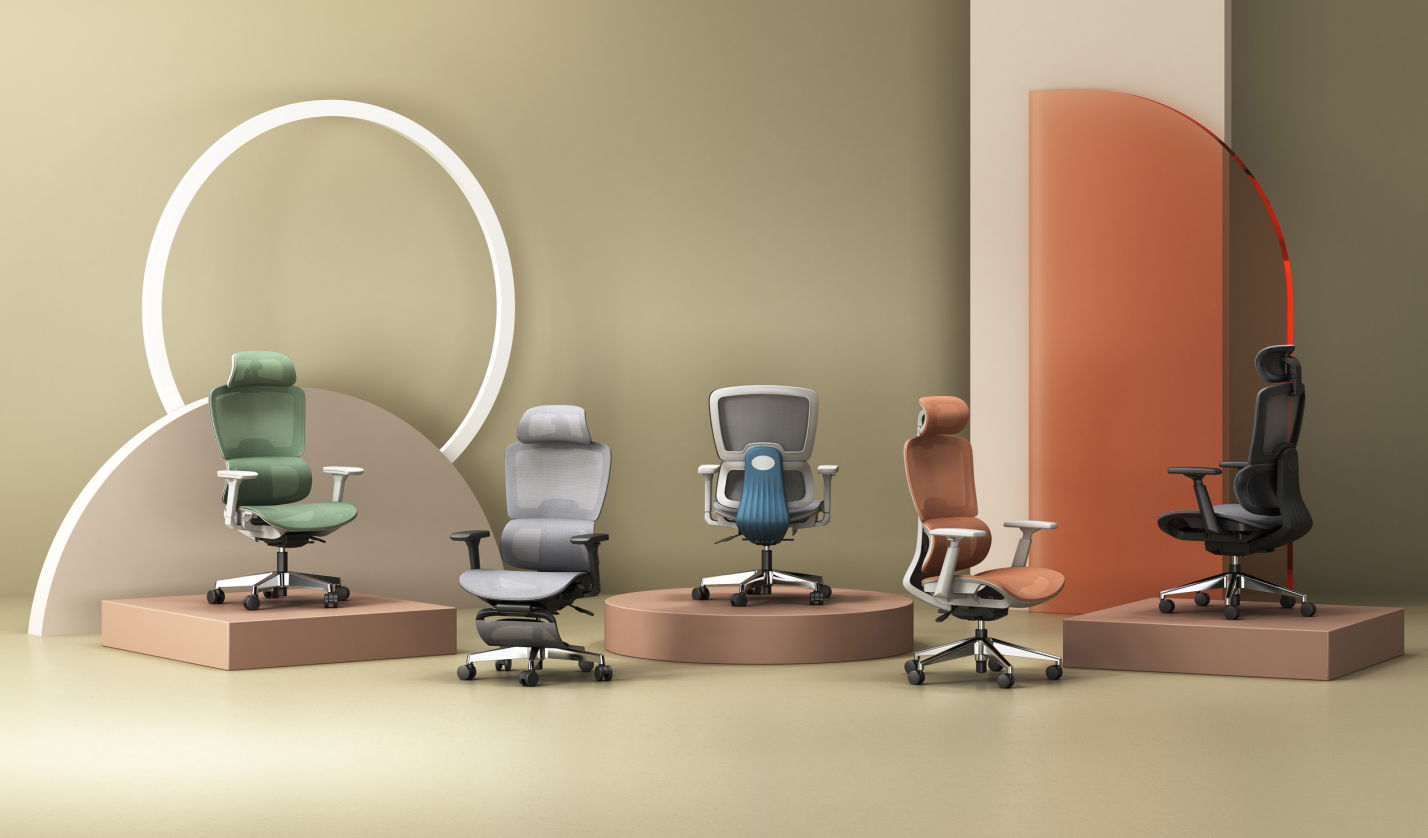
Selecting executive chairs at scale means choosing products that deliver consistent ergonomic performance, long-term durability, and reliable quality across every workspace.
This guide outlines the key evaluation criteria procurement teams should use to compare executive chairs, assess suppliers, and make informed purchasing decisions before issuing an RFQ.
Ergonomic Specification Requirements for Extended Use Executive Chairs
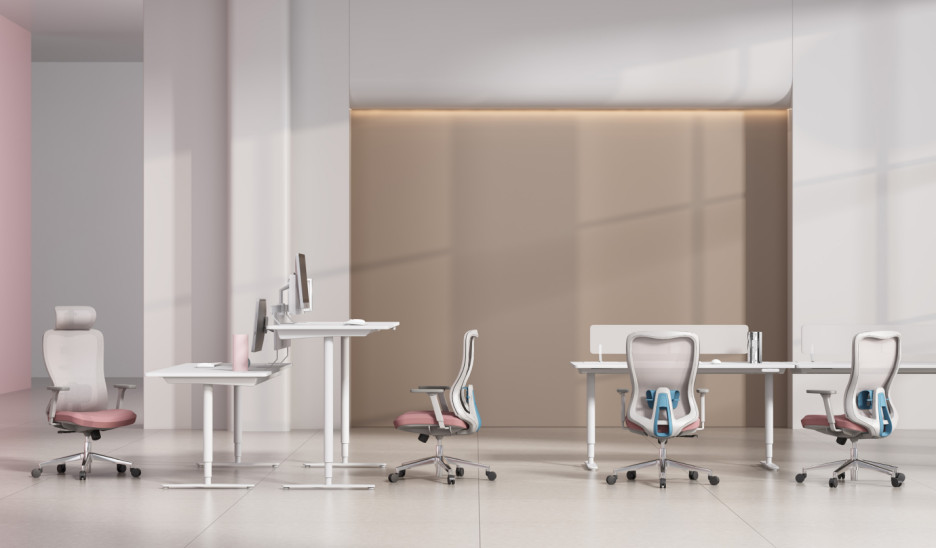
Ergonomic performance is the primary differentiator between contract-grade executive chairs and standard commercial seating. For eight-hour-plus daily use, procurement teams must verify measurable adjustment ranges — not marketing claims.
Specifications should be documented in the supplier’s technical data sheet and confirmed against physical sample units before bulk commitment.
Seat Height and Depth Adjustment
The typical commercial seat height range for an office chair is approximately 430–530mm (16.9″–20.9″). This accommodates users from the 5th-percentile female to the 95th-percentile male when paired with a standard 720–750mm desk height. Seat depth should offer a minimum of 50–80mm of forward-backward travel to support different leg lengths without creating pressure behind the knees.
Procurement specifications should state both the minimum and maximum seat height in millimeters, along with the seat depth adjustment range, as part of the RFQ dimensional requirements. For institutional orders, high-back leather executive chairs with full seat adjustment capability are a standard specification for director-level and C-suite office environments.
Lumbar Support and Backrest Adjustment
Lumbar support should be vertically adjustable by at least 25–50mm to align with the L2–L4 vertebral region across different user heights. Depth-adjustable lumbar — where the pad moves forward and backward — is a critical feature for chairs specified for extended-duration tasks.
The backrest should offer a recline range of 90° to at least 120°, with a lockable tilt mechanism and adjustable recline tension. These specifications should be verified against sample units before bulk commitment.
Armrest Adjustability
For contract-grade executive chairs used in full-day work environments, 4D armrests — adjustable in height, width, depth, and pivot angle — are the baseline specification. The user’s arms should rest at a 90–110° angle with relaxed shoulders.
Armrests that lack sufficient range create shoulder strain and reduce the chair’s effective user population within a mixed-height workforce.
Structural Compliance and Certification Standards
Procurement teams should never accept unverified claims of compliance. Structural test documentation from an accredited third-party laboratory is a non-negotiable line item in any institutional chair RFQ.
Chairs without documented certification represent an unquantified liability risk for facilities managers responsible for employee health and safety.
ANSI/BIFMA X5.1 — General-Purpose Office Chairs
ANSI/BIFMA X5.1 provides a common basis for manufacturers, specifiers, and users to evaluate the safety, durability, and structural adequacy of general-purpose office chairs — including styles described as executive, task/secretarial, guest chairs, and stools. The current standard is ANSI/BIFMA X5.1-2017 (Reaffirmed 2022), designed for users up to 125kg / 275 lbs, and it evaluates safety and durability over a simulated lifetime of more than 10 years of daily use.
Procurement managers should request the full test report — not just a certificate of compliance — and verify whether the supplier’s product is listed in the BIFMA Compliant® Product Registry.
EN 1335 — European Office Chair Standard
EN 1335 is the European standard covering ergonomic dimensions and safety — it prescribes the size ranges and adjustability a compliant office work chair must offer, in addition to safety testing.
For organizations with multinational operations or European office locations, dual compliance with both BIFMA X5.1 and EN 1335 should be specified in the tender documentation. Look for compliance with EN 1335-1:2020+A1:2022 (dimensions) and EN 1335-2:2018 (safety) as minimum reference points when evaluating European-market seating.
GREENGUARD and Emission Certifications
Beyond structural testing, indoor air quality certifications like GREENGUARD Gold confirm that the chair’s materials — foam, adhesives, finishes — meet low-emission thresholds for formaldehyde and VOCs. For corporate environments with sealed HVAC systems, this is a workplace health compliance factor, not a marketing bonus.
Procurement teams should request the GREENGUARD certificate number and verify it through the UL SPOT database.
Gas Lift Cylinder and Mechanism Quality
The gas lift cylinder is the single most failure-prone component in an office chair over a multi-year lifecycle. Specifying the correct cylinder class protects against premature seat sinking, height loss, and unstable support — all of which increase replacement frequency and erode the cost efficiency of a bulk procurement decision.
Class 4 Gas Lift Specification
Class 4 gas lifts are built for heavy-duty applications like executive or gaming chairs, providing superior strength and longevity. They are constructed using:
- Hardened steel pistons with a minimum diameter of 20mm
- Rigorous pressure testing and fatigue cycles during manufacturing
- Nitrogen gas filling for smooth, controlled movement
For institutional procurement, Class 4 should be the minimum cylinder specification for any executive chair intended for eight-hour-plus daily use.
Cycle Life and Certification Verification
Class 4 cylinders are often tested to exceed 120,000 raise/lower cycles — if adjusted 10 times per day, this could last over 30 years under normal conditions. By comparison, Class 3 is rated at approximately 100,000 cycles and Class 2 at only 50,000.
Procurement teams should ensure the cylinder is certified by a reputable third-party lab such as TÜV, LGA, or SGS, with certifications verifying compliance with DIN 4550 or BIFMA X5.1.
Foam Density, Upholstery Grade, and Durability Planning
Seat cushion foam and upholstery material are the first components users perceive — and the first to show wear in high-use corporate environments. These specifications must be explicitly stated in the RFQ rather than left to supplier discretion.
Foam Density for Contract-Grade Seating
For executive chairs rated at eight-hour daily use, seat cushion foam density should be a minimum of 45–55 kg/m³. Foam below 40 kg/m³ compresses noticeably within six to twelve months of daily use, leading to premature seat flattening and loss of support.
Cold-cure molded foam holds shape better than cut foam for high-use applications and should be specified where budget allows.
Upholstery Material Selection
Executive chairs traditionally favor materials like genuine Napa leather, PU leather, and bonded leather — each carrying different durability, maintenance, and cost profiles across a five-to-eight-year replacement cycle. For mid-management and open-plan office environments, a PU leather executive office chair offers a practical balance of finish quality and per-unit cost at institutional order volumes.
Expected lifecycle by material:
- Full-grain leather — seven to ten years with proper maintenance
- PU leather — three to five years under daily use
- Mesh backrests — superior breathability, but may not meet the visual standards required for C-suite environments
The RFQ should specify upholstery type, expected maintenance protocol, and projected replacement cost.
Replacement Cycle and Lifecycle Costing
An uncertified chair may need replacement every one to two years due to a failing gas cylinder or cracked base, while a certified contract-grade chair is engineered for a decade of service — resulting in a significantly lower total cost of ownership when evaluated across the full fleet.
Procurement teams should model total cost across the planned replacement cycle, including per-unit purchase price, warranty coverage, spare parts availability, and projected maintenance hours.
Supplier Qualification and Documentation Readiness
Evaluating the chair itself is only half the procurement decision. The supplier’s documentation capability, order management infrastructure, and post-sale support determine whether a bulk executive chair purchase performs as specified across a multi-year period.
Procurement teams that skip supplier qualification face batch inconsistency, warranty disputes, and unplanned replacement costs.
RFQ Documentation Package
A qualified supplier should provide a complete RFQ documentation package that includes:
- Third-party test reports for BIFMA X5.1 or EN 1335
- Material safety data sheets (MSDS) for foam and adhesives
- GREENGUARD or equivalent emission certifications
- Finish code specifications for batch matching
- A warranty terms document covering structural frame, gas lift, and mechanism components
Manufacturers like Onmuse that maintain documented finish codes and material certifications as part of the standard institutional RFQ package reduce the administrative burden on procurement teams during supplier qualification.
Batch Consistency and Multi-Floor Rollout Support
For corporate headquarters projects requiring 200–1,000 executive chairs across multiple floors, batch consistency is a critical risk factor. Procurement specifications should require documented finish codes, fabric or leather dye-lot tracking, and a commitment to matching specification across phased deliveries.
Any variation in foam density, upholstery shade, or mechanism type between batches creates visible inconsistency that reflects poorly on the facilities team.
Warranty Structure and Spare Parts Access
Contract-grade executive chair warranties should cover a minimum of five years on the structural frame and mechanism, and three years on foam and upholstery.
Equally important is the supplier’s ability to ship individual replacement components — gas lift cylinders, armrest pads, caster sets — without requiring full chair replacement for a single part failure. Spare parts availability should be confirmed in writing before contract award.
For procurement teams also specifying office furniture, reviewing how businesses choose executive desks for leadership offices provides a parallel qualification framework for desk supplier evaluation.
Budget Framework and Order Planning
Cost management for executive chair procurement extends beyond the per-unit list price. Procurement managers must account for volume pricing thresholds, delivery phasing, and lifecycle replacement costs when building the budget case for an institutional seating order.
Volume Pricing and MOQ Considerations
Most contract furniture manufacturers offer tiered pricing at minimum order quantities of 50, 100, and 500 units. Procurement teams should request formal pricing at each tier and compare not just unit cost but also what is included: shipping terms (FOB vs. CIF), assembly requirements, and packaging waste handling.
For projects that also include workstation furniture, combining executive desks and seating within a single procurement package can improve negotiating leverage on total order value.
Phased Delivery and Project Calendar Alignment
For institutional projects requiring phased delivery across multiple buildings, working with a supplier that supports split-PO scheduling reduces inventory pressure without compromising finish consistency. Delivery schedules should align with construction handover milestones, IT workstation installation, and occupancy dates to avoid storage costs and damage risk from on-site warehousing.
Lead times for standard configurations typically run four to eight weeks; custom upholstery or finish specifications require eight to twelve weeks and must be factored into the project programme.
FAQs about Executive Chairs
Q1. What ergonomic specifications should procurement teams require for executive chairs used in 8+ hour work shifts?
Executive chairs for long working hours should include adjustable seat height, seat depth, lumbar support, 4D armrests, and a lockable reclining mechanism. These are the baseline features for contract-grade seating in full-day office environments.
Q2. Which BIFMA or ISO standards apply to executive chair procurement for corporate environments?
For commercial office projects, procurement teams should prioritize chairs certified to ANSI/BIFMA X5.1 or EN 1335, and request the full third-party test report rather than a certificate of compliance alone.
Q3. What foam density and gas lift specifications indicate contract-grade executive chair quality?
A contract-grade executive chair should use 45–55 kg/m³ seat foam and a Class 4 gas lift to ensure long-term durability. Foam below 40 kg/m³ and cylinders below Class 4 lead to premature seat flattening and height loss.
Q4. How do procurement managers evaluate executive chair durability for a 5–8 year replacement cycle?
Review certification reports, foam density, gas lift cycle rating, warranty terms, and spare parts support before placing a bulk order. A certified contract-grade chair delivers a significantly lower total cost of ownership than an uncertified alternative replaced every one to two years.
Q5. What upholstery grade is appropriate for executive chairs in high-use corporate office environments?
Full-grain leather suits executive and client-facing offices with a seven-to-ten-year lifecycle, while PU leather is a cost-effective option for a three-to-five-year cycle in everyday corporate use. Browse the executive chair collection to compare materials.
Q6. How should procurement teams evaluate lumbar support and adjustment range specifications?
Require vertically adjustable lumbar (25–50mm), seat depth adjustment, and a lockable recline range of 90°–120° so a single specification fits a mixed-height workforce across long seated hours.
Q7. What warranty and spare parts availability should procurement teams require from suppliers?
Choose suppliers offering at least a five-year structural and mechanism warranty, three years on upholstery, and confirmed spare parts stock (gas lifts, casters, armrest pads) for a minimum of five years after the order date.
Q8. How do bulk executive chair orders affect per-unit cost and lead time planning?
Bulk orders unlock tiered pricing at 50/100/500-unit thresholds. Standard production lead times run 4–8 weeks, extending to 8–12 weeks for custom upholstery or finishes — both must be factored into the project calendar.