School Furniture Procurement Checklist for Educational Institutions
Procuring school furniture for a multi-classroom or multi-building rollout involves more than comparing unit prices. Procurement officers must verify safety certifications, confirm material compliance, evaluate supplier capacity, and schedule deliveries around academic calendars — all before the first purchase order is signed.
This checklist structures that process into a repeatable framework covering specification criteria, supplier qualification steps, documentation requirements, and budget controls that reduce risk in institutional school furniture orders ranging from 50 to 2,000 units.
1. Define Project Scope and Parameters Before Issuing an RFQ
Before a supplier can respond with accurate pricing, the procurement team must establish the project scope in measurable terms. Vague RFQs produce inconsistent quotes and create compliance gaps later in the delivery process.
Establish Unit Quantities by Space Type
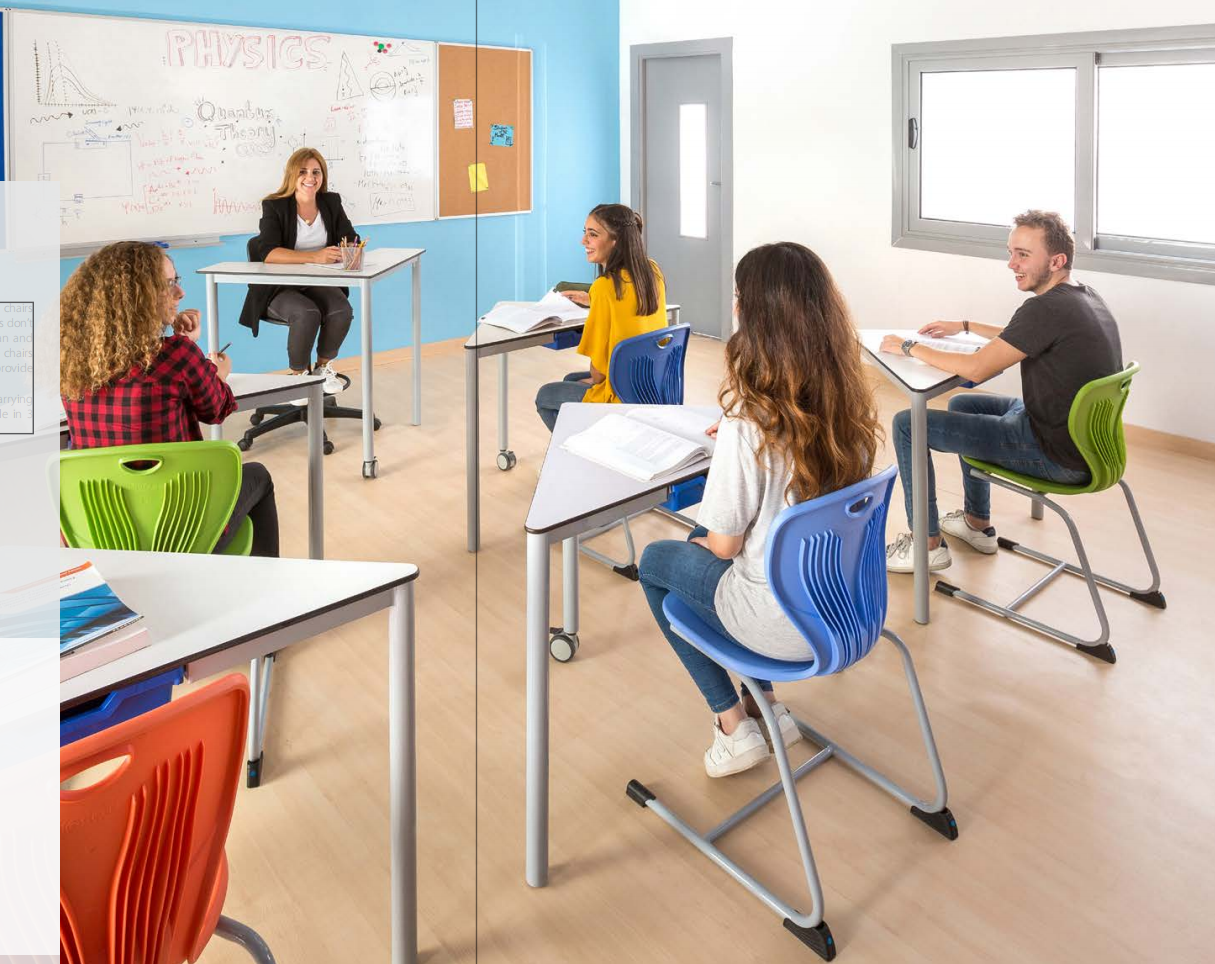
Specify the number of desks and chairs required per classroom and break the total down by space type — standard classrooms, science labs, library areas, and multi-purpose rooms.
For a 30-student classroom, a standard configuration requires 30 student desk-and-chair sets plus one teacher desk unit. Across a 20-classroom school, that represents a minimum 600-unit procurement exercise before accessories and ancillary furniture are considered.
Define Age Group and Grade Level Requirements
School furniture dimensions vary by student age group in accordance with EN 1729 Part 1 (dimensions) and ISO 5970 (size categories). A single procurement order covering Grades 1 through 8 will require multiple size groups.
ISO 5970 Size 2 through Size 6 covers student height ranges from 1,000mm to 1,800mm. Specify the grade levels to be furnished and the corresponding size categories in the RFQ so that all responding suppliers are quoting against identical anthropometric criteria.
Align the Installation Window with the Academic Calendar
Most institutions require full furniture installation before the academic year begins, which means confirmed on-site delivery at least 3–4 weeks before term start to allow room-by-room installation sequencing.
Projects tied to renovation schedules may require phased delivery across multiple buildings. This phasing structure must be agreed with the supplier at RFQ stage, not after the purchase order is placed.
2. Safety Standards and Material Compliance for School Furniture Procurement
Institutional buyers purchasing furniture for student use must meet specific safety and material standards. Failure to verify compliance before purchase creates liability exposure and can disqualify furniture from regulated school environments.
Structural Safety Testing Requirements
School chairs and desks must pass structural safety testing aligned with EN 1729 Part 2, which covers strength and durability requirements for educational furniture under repeated-use conditions.
Procurement teams should require test reports from accredited third-party laboratories — not manufacturer-issued self-declarations — as part of the supplier’s standard documentation package. Reports issued by recognized bodies such as SGS, TÜV, or Bureau Veritas carry the verification weight required for public institution procurement files.
Material Compliance for Desktop and Frame Surfaces
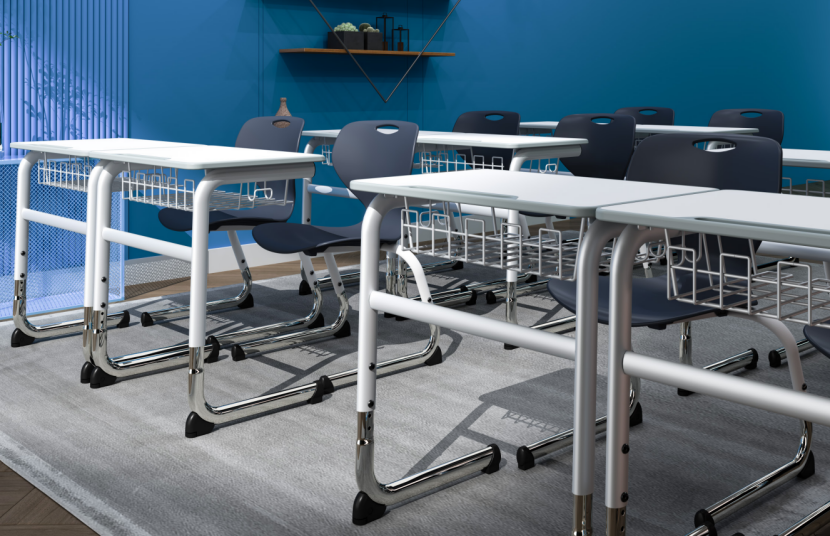
Desktop panels should be specified as E1-grade particleboard or MDF with melamine surface finish, compliant with EN 13986 formaldehyde emission limits. For institutional school orders, desktop thickness should be a minimum 18mm for fixed single-student desks.
Metal frame components — typically 25×25mm or 30×30mm square-section steel tube — should carry electrostatic powder coating to a minimum 60–80 micron thickness for corrosion resistance in high-humidity classroom environments.
Chemical Safety for Student-Contact Surfaces
All surfaces in contact with students — seat shells, desk tops, and frame edges — must comply with applicable chemical safety standards. For products used by students under 14, surface coatings should comply with EN 71-3 migration limits.
Procurement officers should request a material safety data sheet (MSDS) or equivalent chemical compliance declaration for all student-contact surfaces as part of the RFQ response package, not as a post-award supplement.
Need a ready-made compliance file for your tender? ONMUSE supplies EN 1729, EN 13986 (E1) and EN 71-3 documentation as a standard part of every institutional RFQ package.
Contact us to request the certification document pack before you finalize your supplier shortlist.
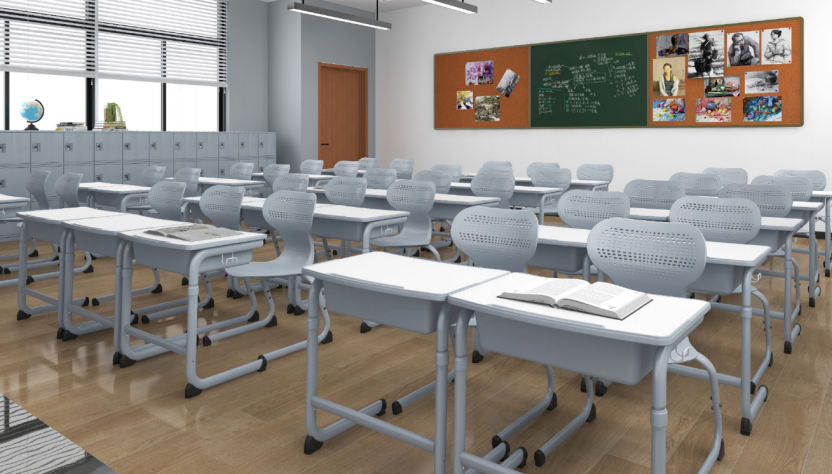
3. Specifying School Desk and Chair Requirements in the RFQ
A well-structured RFQ reduces supplier ambiguity and produces comparable quotes across multiple vendors. Procurement teams that use vague product descriptions receive inconsistent proposals that cannot be objectively evaluated against one another.
Dimension and Ergonomic Criteria by Size Group
For primary school students aged 6–12, desk heights typically range from 520mm to 640mm and seat heights from 300mm to 380mm, corresponding to ISO 5970 Size 2–4. For secondary school students aged 12–18, desk heights range from 640mm to 760mm with seat heights from 380mm to 460mm (Size 4–6).
These ranges should appear in the RFQ specification sheet rather than generic age descriptors. Our guide on how to choose school desk and chair solutions provides a detailed breakdown of size categories and their procurement application for mixed-grade institutional orders.
Finish Codes and Batch Consistency Requirements
For multi-classroom rollouts, finish code consistency is a critical procurement control. Specify the required colour codes — RAL references for frame powder coat and laminate reference codes for desktop surfaces — and include a clause requiring batch finish documentation from the manufacturer with each delivery.
Manufacturers like ONMUSE that maintain documented finish codes across production batches give procurement teams a reliable audit trail for phased rollout orders, particularly where classrooms are refurnished across multiple budget years.
When specifying school desk and chair configurations for mixed-age environments with adjustable-height requirements, define the adjustment range in millimetres in the RFQ rather than referencing size categories alone. This ensures all responding suppliers are quoting against identical functional criteria.
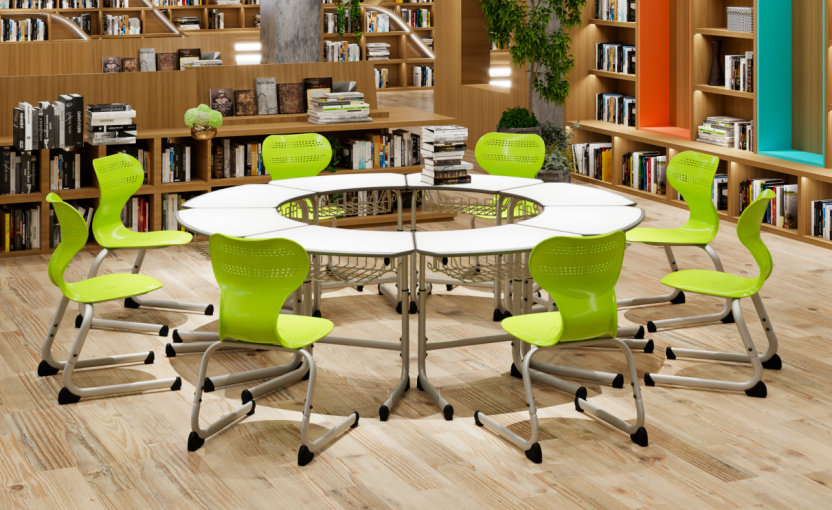
4. Supplier Qualification Criteria for Institutional School Furniture Orders
Supplier selection for a school furniture procurement project must go beyond catalogue browsing. Institutional buyers need to verify that the supplier can deliver at scale, consistently, and within the required project timeline.
Production Capacity and MOQ Verification
Confirm the supplier’s minimum order quantity (MOQ) and available production capacity for the required delivery window. A supplier with an MOQ of 200 units per SKU may not accommodate a 50-unit trial order without a confirmed scale-up commitment in writing.
Request a production schedule document showing available capacity for your target delivery period before issuing a purchase order.
Reference Projects and Institutional Experience
Request a list of completed institutional school furniture projects from the past 24 months, including order size, product type, and delivery destination. A supplier with documented experience fulfilling 500–2,000 unit school orders demonstrates the logistics infrastructure, quality control processes, and documentation capability required for institutional procurement.
Project references without verifiable detail — order size, client type, delivery timeline — should be treated as unverified.
Pre-Shipment Inspection and Quality Control Access
Confirm whether the supplier supports pre-shipment inspection by a third-party inspection agency. For orders above 300 units, pre-shipment inspection is a risk mitigation standard that should be written into the purchase contract.
Clarify at the RFQ stage whether inspection costs are absorbed by the supplier or billed separately, and confirm the lead time required to schedule an inspection within the production calendar.
5. Budget Planning and Total Cost Framework for Bulk School Furniture
Per-unit price is not the only cost variable in a school furniture procurement project. Procurement teams that optimize for unit price alone frequently encounter total cost overruns driven by logistics, installation breakage, and shortened replacement cycles.
Build a Per-Classroom Budget Model
A structured budget approach allocates cost per classroom rather than per unit. A 30-student classroom requiring desks, chairs, and a teacher desk unit represents a discrete budget cell.
Across a 20-classroom project, multiply that cell cost by the number of rooms, then apply a 10–15% project contingency to cover installation breakage, accessory requirements (bag hooks, book boxes), and quantity adjustments identified during room surveys.
Calculate Annualized Lifecycle Cost, Not Just Purchase Price
Contract-grade school furniture specified to EN 1729 Part 2 testing standards should support a 7–10 year replacement cycle under normal classroom use. Procurement officers comparing quotes at different price points should calculate the annualized cost per unit — purchase price divided by expected lifecycle years — rather than evaluating on purchase price alone.
A unit priced 20% higher but with a 40% longer replacement cycle delivers a lower annualized cost and reduces the frequency of procurement administration cycles.
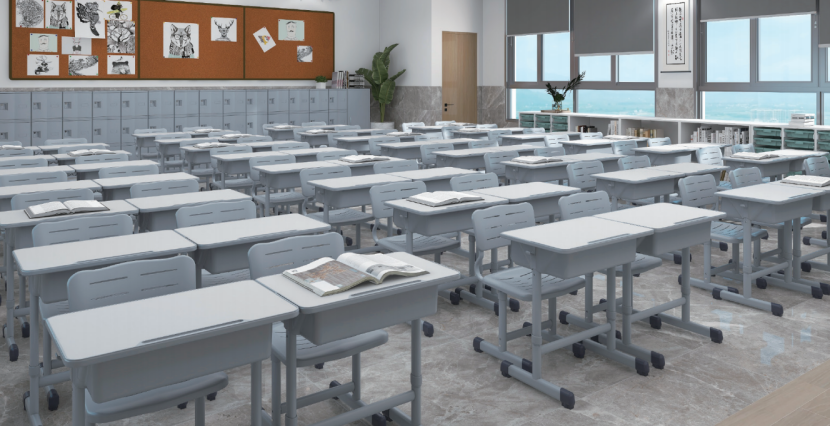
6. Lead Times, Delivery Scheduling, and Phased Order Management
Lead time management is one of the highest-risk variables in institutional school furniture procurement. Orders placed without sufficient lead time relative to the academic calendar create delays that cannot be recovered without significant cost penalties.
Standard Lead Times for Bulk School Furniture Orders
Bulk school furniture orders of 200 to 2,000 units typically carry production lead times of 30–60 days ex-factory, depending on product complexity and production queue at order confirmation. Add 15–25 days for sea freight (Asia to the Middle East or Europe), plus 5–10 days for customs clearance and local delivery.
Procurement teams should plan for 50–90 days total from purchase order confirmation to on-site delivery and build in a buffer of at least 10–15 additional days for installation.
Structuring Phased Deliveries for Multi-Building Projects
Multi-building school projects often require phased delivery — completing building A before construction finishes in building B, for example. This requires split purchase order scheduling with the supplier, agreed in writing at contract stage.
Confirm the supplier’s ability to hold finished goods inventory between delivery phases, or negotiate a phased production and delivery schedule aligned to construction handover dates. Verbal agreements on phased delivery are a leading cause of institutional project disputes.
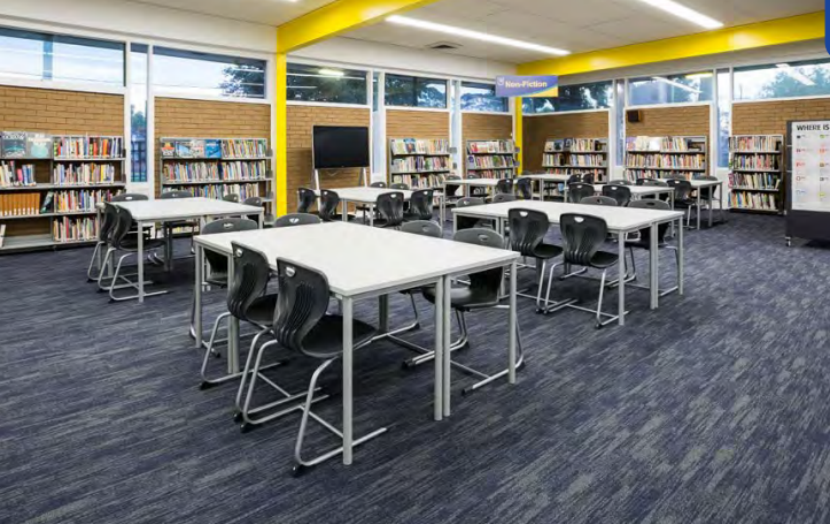
7. Documentation and Compliance Readiness for Tender Submission
Institutional school furniture procurement in public-sector or government-funded schools frequently requires a formal tender documentation package. Preparing this package in advance reduces response time and prevents disqualification on administrative grounds.
Required Supplier Documentation Package
A complete supplier documentation package for a school furniture tender typically includes: EN 1729 Part 1 and Part 2 test reports from an accredited laboratory, E1 formaldehyde emission compliance certificates (EN 13986), material safety declarations for student-contact surfaces (EN 71-3 where applicable), finish code records for batch consistency verification, production capacity statements, and reference project documentation.
This package should be requested during supplier pre-qualification — not after the purchase order is placed.
Internal Procurement Documentation Checklist
The internal procurement file should include: a written specification sheet with dimension ranges and finish codes, a signed RFQ with confirmed response deadline, a supplier evaluation scorecard with weighted criteria, purchase order terms referencing delivery dates and inspection rights, and a delivery acceptance checklist for use by the receiving team on installation day.
For institutional buyers managing school furniture projects across multiple campuses, ONMUSE provides full material certification documentation — including E1 compliance and EN 1729 test reports — as part of the standard RFQ package for institutional orders.
Start Your School Furniture Procurement Project
Whether you are furnishing a single classroom or rolling out a multi-building campus, ONMUSE supports schools, contractors, and distributors with bulk production, full certification documentation, and flexible customization.
Contact our team with your grade level breakdown, unit quantities, and target delivery date to get a project quotation and a complete RFQ documentation package.
FAQs about School Furniture Procurement
Q1. How many supplier quotes should I request for a school furniture tender?
Request quotes from three to five qualified suppliers, all responding to the same RFQ criteria so the comparison stays objective. ONMUSE provides a complete quote against your specification sheet, including certification documents, so it fits directly into a multi-supplier comparison.
Q2. What school furniture products does ONMUSE offer?
ONMUSE provides school desks and chairs, auditorium chairs, student apartment beds, and related classroom furniture. Explore our School Furniture Collection for available product categories.
Q3. Can ONMUSE customize school desks and chairs for different age groups?
Yes. ONMUSE offers multiple size options, colors, and configurations for primary schools, secondary schools, and higher education projects.
Q4. Does ONMUSE provide certification documents for school furniture projects?
Yes. ONMUSE can provide EN 1729 test reports, material compliance documents, and product specifications to support RFQs, tenders, and institutional procurement projects.
Q5. What is the typical lead time for bulk school furniture orders?
Most school furniture projects require 30–60 days for production, depending on order volume and customization. Delivery schedules can be planned around your project timeline and installation date.
Q6. Can schools purchase office furniture together with school furniture?
Yes. Many educational projects need both classroom and administrative furniture. Explore our Office Furniture Solutions for principals, teachers, and administrative departments.
Q7. How can buyers start a school furniture procurement project with ONMUSE?
Submit your project requirements, quantities, and delivery schedule to the ONMUSE team. Browse our School Furniture Collection before requesting a quotation.