How to Choose Conference Room Chairs for Commercial Offices & Projects
Choosing conference room chairs is not about comfort alone—it’s a purchasing decision that affects meeting efficiency, space planning, and long-term durability.
This guide helps office managers and procurement teams select conference room chairs based on room size, meeting duration, mobility needs, ergonomics, and budget—so the chairs perform well in real commercial use, not just in appearance.
Assessing Conference Room Size & Seating Capacity
Conference room size directly affects seating capacity, circulation space, and meeting comfort. Overcrowding limits movement and safety, while underutilized space reduces room efficiency. Accurate planning should always start with room measurements before selecting chair quantity and layout.
Measuring Conference Room Dimensions for Proper Chair Planning
Start by identifying the room shape and usable floor area. Rectangular rooms typically work best with long tables and linear seating, while square rooms are more flexible and may support round or U-shaped layouts. Allow a minimum of 30 inches of clearance behind chairs for circulation.
Measure wall-to-wall dimensions and note fixed elements such as doors, windows, and structural columns, as these directly limit chair placement and aisle spacing.
Accurate measurements help avoid layout issues and ensure the selected conference chairs fit both the room and usage requirements.
Calculating Maximum Seating Capacity for Conference Rooms
A practical rule for conference room planning is to allow 10–12 square feet per person, including seating and circulation space. Start with the room’s total area, then deduct space occupied by fixed elements such as screens, cabinets, or columns.
For example, after subtracting non-usable areas, divide the remaining square footage by 10 to estimate the maximum number of chairs. Small rooms under 100 square feet typically accommodate 4–6 chairs, while larger rooms over 200 square feet can support 15 or more, depending on layout.
After placing the chairs, always check walkability by pushing chairs back from the table to ensure there is sufficient clearance for movement.
Meeting Duration and Chair Comfort Requirements
Once seating capacity is defined, meeting duration becomes a key factor in chair selection. Short meetings place minimal demands on support, while longer sessions require better ergonomics, cushioning, and back support to maintain comfort and focus.
Matching chair design to actual usage time helps avoid over-specifying for brief meetings or under-specifying for extended discussions, leading to more balanced purchasing decisions.
Chairs for Short Meetings (Under 1 Hour)
For short meetings such as daily check-ins or brief discussions, conference chairs can prioritize simplicity and cost efficiency. Basic ergonomic support and light cushioning are generally sufficient for sessions under one hour.
Fixed-height chairs work well in these settings, and armrests are optional since participants often stand or move during conversations. This approach helps control costs and allows budget to be allocated toward higher-spec seating for longer meetings.
Chairs for Extended Meetings (Over 2 Hours)
Chairs used for lengthy meetings take on even greater challenges during strategy sessions or workshops. Discomfort becomes evident if there is inadequate support when sitting for prolonged periods. Backs begin to hurt after 45 minutes, and adjusting seating to provide relief becomes a group distraction. In order to soften soreness, conference room chairs should have additional cushioning, for instance 2-inches or more thick padding.
Strong lumbar support maintains proper posture while breathable mesh or perforated leather backs cool down heat build up. Relaxed shoulders are provided by flexible armrests designed for various body shapes. Ignoring these features invites great restlessness which reduces performance.
Style and Design Alignment for Professional Office Spaces
After considering room size and meeting length, think about looks. Style and design matter for your office vibe. Chairs should match your space and brand.
Matching Conference Chairs to Modern vs. Traditional Office Environments
Modern offices need sleek, simple chairs. Think mesh backs and metal frames. These fit tech startups or creative studios. Traditional offices look better with leather or wood. Executive suites often use these. The wrong style feels out of place. A modern chair in a classic room looks odd. Match chairs to your office feel.
Color and Material Coordination for Conference Rooms
Chairs should blend with your room style. Look at your walls and tables. Pick chair colors that complement them. Bright chairs stand out in neutral rooms. Dark chairs fit formal spaces. Materials matter too. Leather feels professional. Fabric feels casual. Match materials to your brand image. A law firm might use black leather. A design agency could pick colorful fabric.
Conference Chair Types: Pick the Right Style for Your Space
After matching chairs to your office style, focus on functionality. Conference chair types serve different needs. Some prioritize movement, others comfort or space-saving.
Mesh Chairs With Or Without Wheels
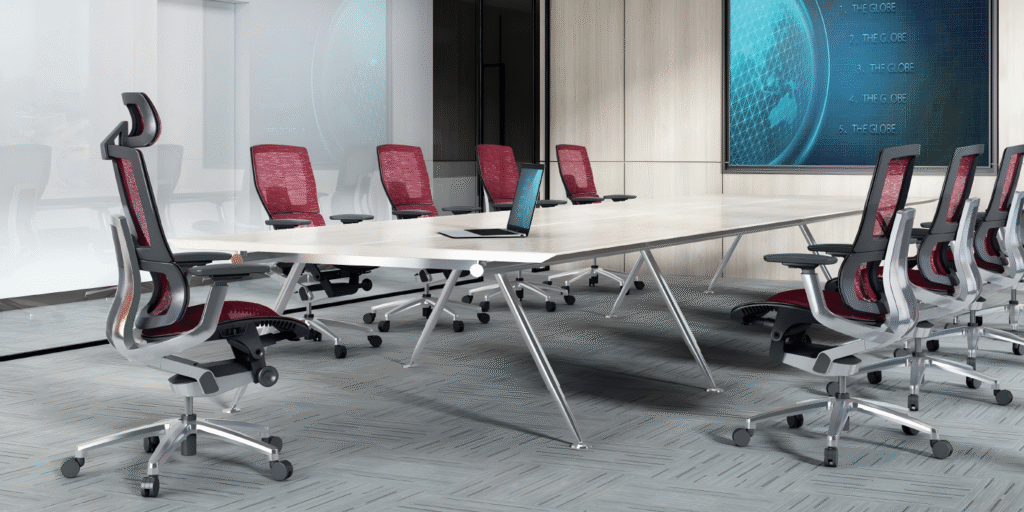
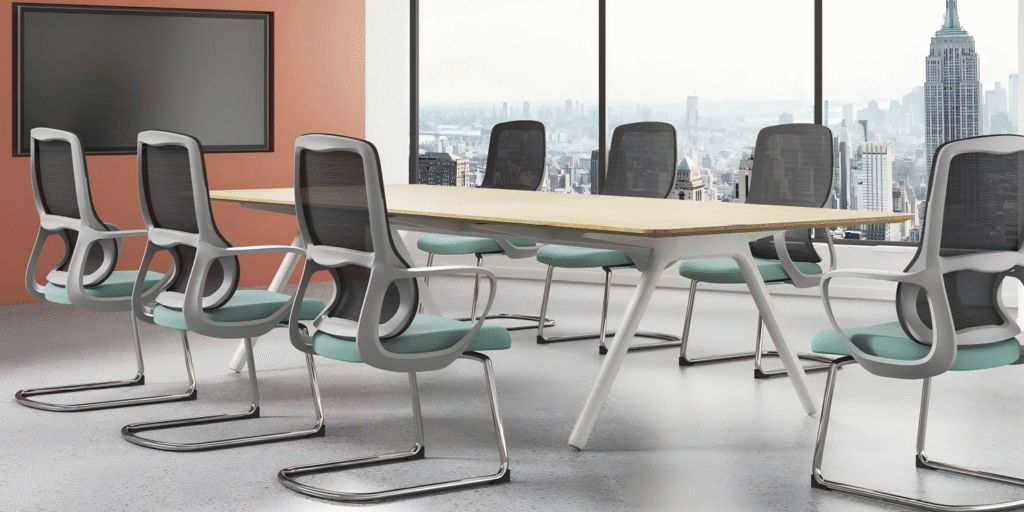
Mesh chairs work well in collaborative spaces. The breathable back keeps users cool during long meetings. Chairs with wheels allow easy movement between discussions. This helps in brainstorming sessions. Stationary mesh chairs offer more stability. They suit spaces where people stay seated longer. Choose wheels for active teams. Pick fixed bases for focused meetings.
Leather Chairs With Or Without Wheels
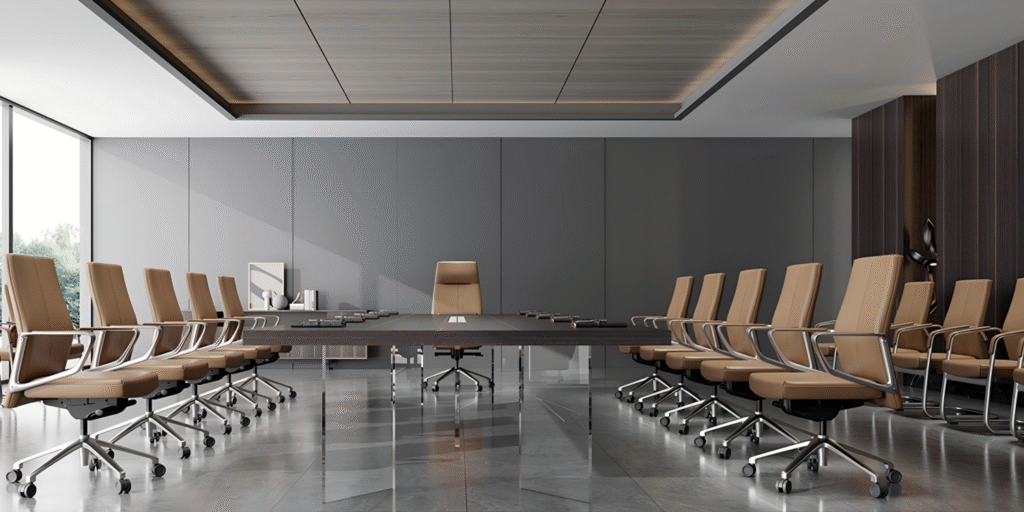
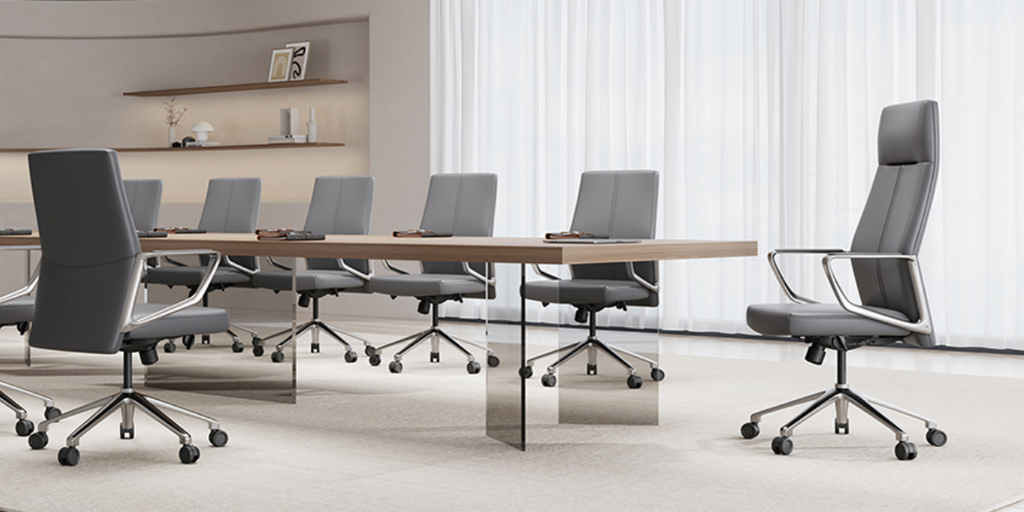
Leather chairs bring a formal look to executive rooms. They feel luxurious and last longer than fabric. Wheels on leather chairs help in large meeting spaces. But fixed bases work better in traditional boardrooms. They prevent unwanted movement during serious talks. Leather needs more care than mesh. It shows wear faster but ages well.
Stackable and Foldable Options
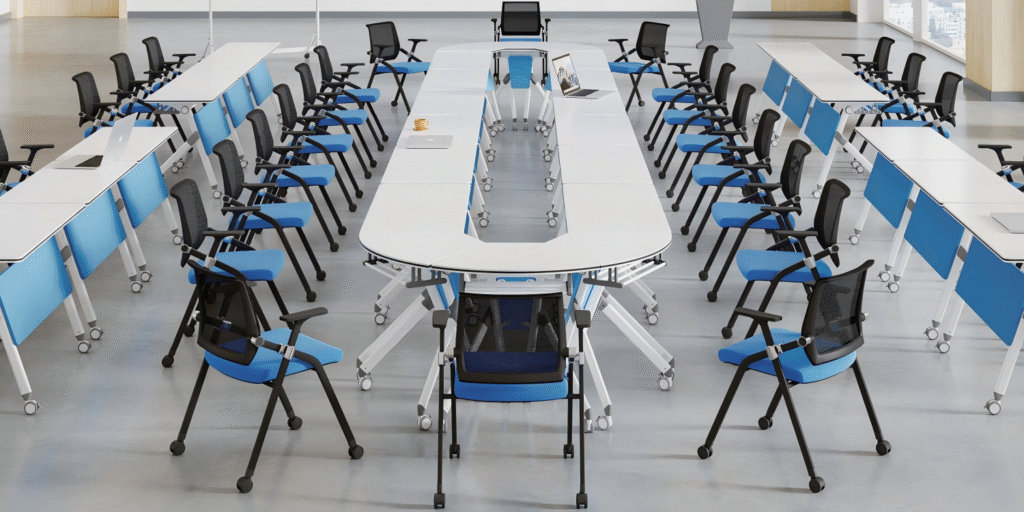
Stackable chairs solve space problems. Training rooms need chairs you can store easily. These work for events with changing attendance. Foldable chairs help even more. You can tuck them away when not needed. Both types sacrifice some comfort for flexibility. They’re not ideal for daily use but perfect for multi-purpose areas.
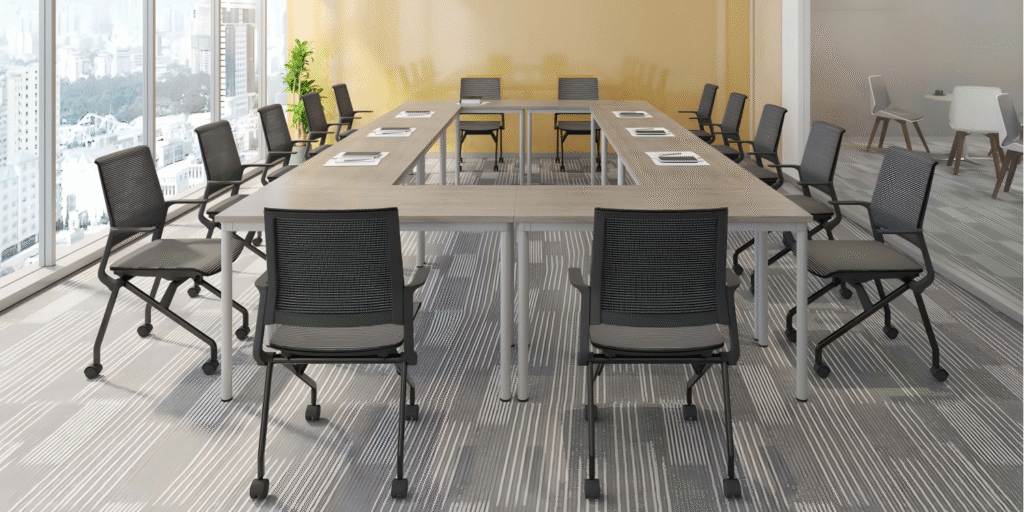
Ergonomics: Comfort That Boosts Productivity
Good conference chairs do more than look nice – they support the body. Ergonomics prevent pain and keep minds focused. Ignore this, and meetings become endurance tests.
Must-Have Ergonomic Features
Four features separate good chairs from great ones. Adjustable height matters most – people’s legs need to sit at 90 degrees. Armrests should move up and down to fit different desks. Proper lumbar support maintains the spine’s natural curve. Without it, backs ache within 30 minutes. Swivel bases help people reach different table spots. These adjustments let one chair fit most body types.
Testing Chairs for All Body Types
Chair testing requires more than sitting briefly. Check seat depth – knees shouldn’t press the edge. The seat should leave 2-3 inches behind your knees. Width matters too – narrow chairs pinch hips. Have multiple staff test chairs before buying. Tall people need higher backs. Short people need adjustable footrests. A chair that fits everyone prevents complaints and injuries.
Functionality: Smart Choices for Your Space
Conference chairs must work with your room’s needs. The right balance keeps people comfortable without wasting space. Poor choices lead to cramped rooms or useless chairs.
Wheels vs. Stationary Bases
Chairs with wheels help in active workspaces. People move easily during brainstorming sessions. The wheels let them reach whiteboards or join groups. But wheels cause problems in formal meetings. Chairs slide when people lean forward. Stationary bases keep chairs in place. They work best for presentations or client meetings. Consider your meeting style before choosing.
Space-Saving Designs for Compact Rooms
Small rooms need smart solutions. Nesting chairs tuck together when not in use. They save floor space while keeping chairs ready. Foldable chairs work better for storage. You can stack them in closets between uses. Both options help multi-purpose rooms. But nesting chairs set up faster for quick meetings. Foldable ones work when storage space is tight. Measure your room before deciding which fits best.
Budget Considerations: Smart Spending for Lasting Quality
Choosing conference chairs involves balancing cost and quality. A smart budget plan gets you durable chairs without overspending. Cheap chairs break faster, costing more long-term.
How Budget Shapes Conference Room Chairs
Your budget determines what features you can get. Limited funds mean prioritizing essentials. More money allows for premium materials and adjustments. Always match chair costs to how often they’re used. Daily-use chairs justify higher spending. Occasional-use chairs can cost less. Plan for replacements too. Good chairs last years, saving money over time.
Cost vs. Value: Material and Durability Trade-offs
Mesh chairs cost less upfront but wear faster. The fabric stretches and stains over time. They work for tight budgets or low-use areas. Leather chairs cost more but last longer. High-quality leather improves with age. It resists stains and tears better than mesh. Mid-range options exist too. Polyurethane leather offers a balance. It looks like real leather but costs less. Consider how long you’ll keep the chairs before choosing materials.
Collaborative Spaces: Seating That Boosts Teamwork
Some meetings need more than standard chairs. Collaborative spaces demand flexible seating that adapts to group work. The right setup keeps teams comfortable and engaged.
Modular Chairs for Dynamic Meetings
Modular chairs solve the problem of changing group sizes. Lightweight designs let teams rearrange seats quickly. Look for chairs under 15 pounds with built-in handles. These work well for design sprints or workshops. Avoid bulky chairs that are hard to move. The best modular options connect together when needed. This creates instant group seating without wasting space.
Encouraging Interaction Through Seating
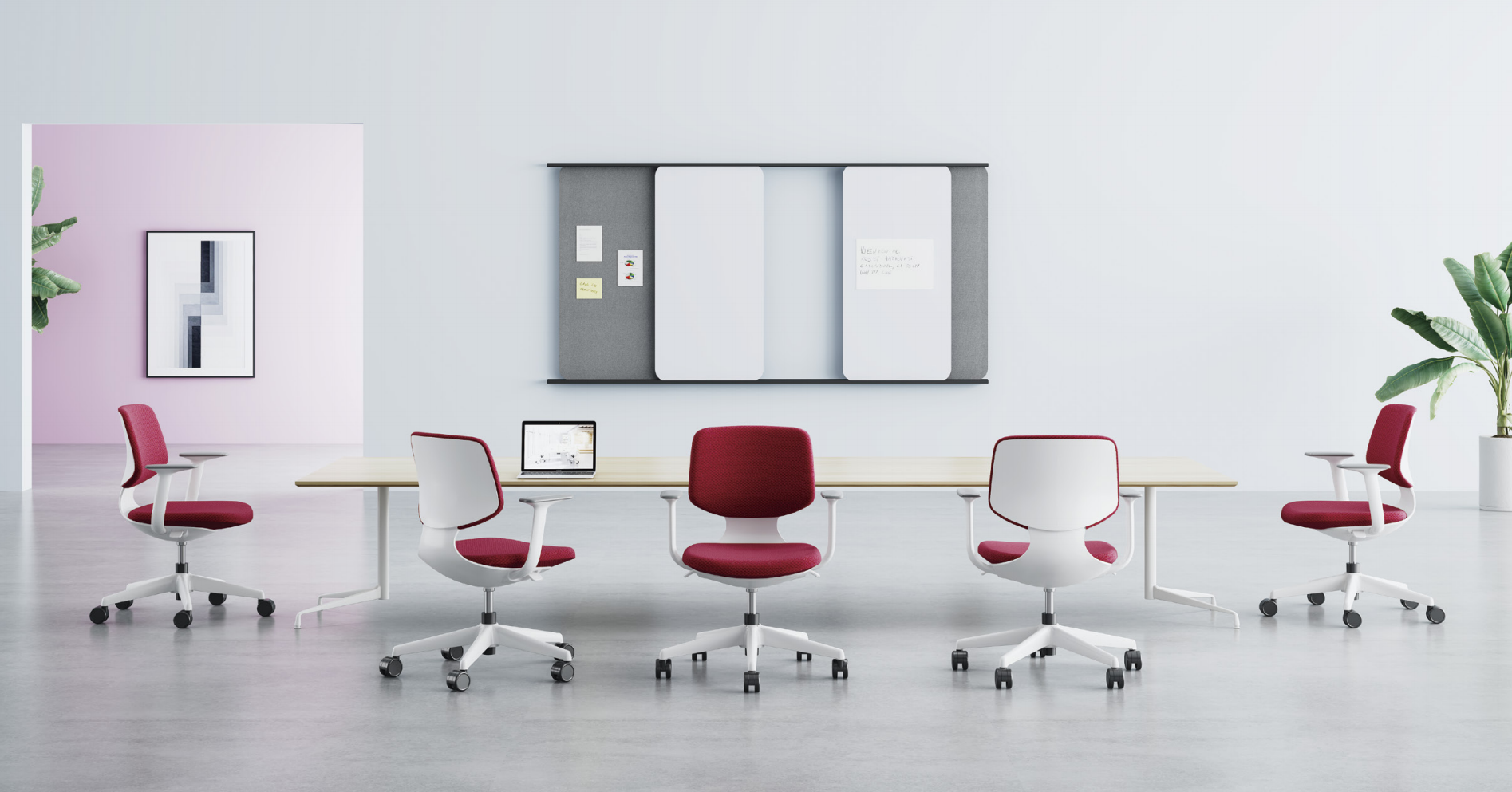
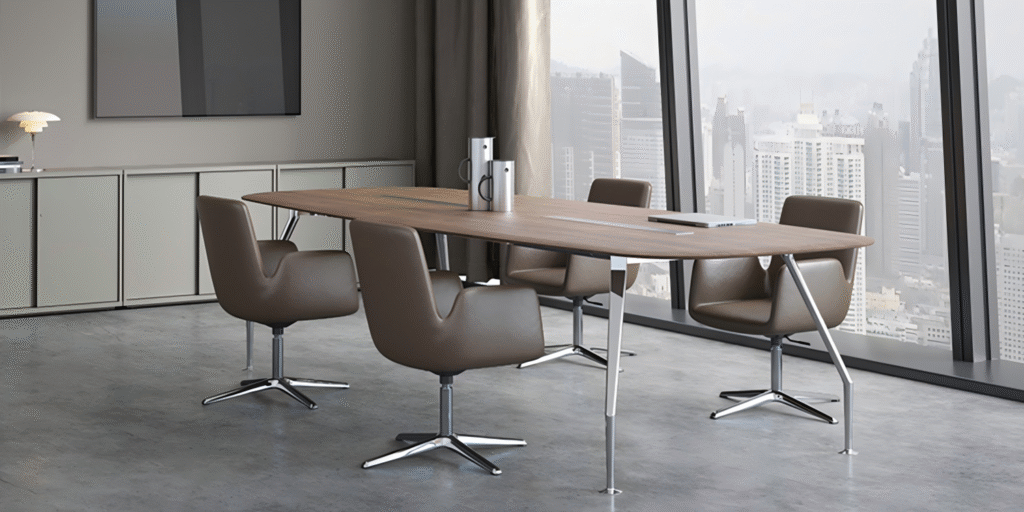
Round tables with swivel chairs help teamwork. People can face different speakers easily. Swivel bases let team members turn to whiteboards. Avoid chairs with high backs in these spaces. They block sightlines across the table. Low-profile chairs keep everyone visible. Include some mobile chairs for spontaneous huddles. This flexibility encourages natural collaboration.
ONMUSE Furniture: Embracing 2025 Design Innovations
ONMUSE Furniture integrates 2025’s defining trends—sustainable materials, multifunctional design, and Art Deco influences—into collections that balance aesthetics with practicality.
Sustainable Material Selection
ONMUSE prioritizes eco-friendly textiles and ethically sourced wood, mirroring 2025’s emphasis on sustainability. Their use of warm brown tones (Pantone 25’s trend color) and wine red accents creates earthy yet luxurious palettes suited for modern interiors .
Modular & Multifunctional Designs
Aligning with the trend for adaptable spaces, ONMUSE’s modular sofas and nesting tables offer reconfigurable layouts—ideal for compact urban living. This versatility supports the 2025 demand for furniture that maximizes functionality without sacrificing style .
Art Deco & Maximalist Inspirations
Geometric patterns, glossy finishes, and bold statement pieces from ONMUSE channel the revived Art Deco movement. Their maximalist approach combines textures like velvet and brushed metal, embodying 2025’s “more is more” ethos for vibrant, personalized spaces .
Key Trend Alignment Summary:
| 2025 Trend | ONMSUE Implementation |
| Pantone 25 Colors | Earthy browns + wine red accents |
| Multifunctionality | Modular sofas; expandable tables |
| Art Deco Luxury | Geometric forms; metallic finishes |
| Sustainable Craftsmanship | Ethically sourced materials |
ONMUSE’s 2025-focused collections demonstrate how trend-conscious design elevates everyday living—transforming furniture into functional art .
Choosing the Right Conference Chairs for Long-Term Use
Selecting conference room chairs is a long-term purchasing decision. Key factors include room size, seating capacity, meeting duration, chair type, ergonomics, space efficiency, budget, and collaboration needs. Each element should support both daily use and long-term durability.
Well-chosen conference chairs improve comfort, reduce distraction, and help meetings run more efficiently. Before finalizing a purchase, test chairs in real use—ideally with 30-minute sit tests—to confirm support, adjustability, and overall usability.
A thoughtful selection process leads to better meeting performance and a more functional workspace.