Leather vs Mesh Executive Chairs: A Procurement Comparison for Corporate Offices
When a corporate procurement team specifies executive seating for a headquarters fit-out or multi-floor rollout, the upholstery decision between leather and mesh affects far more than appearance.
It determines lifecycle cost, maintenance scheduling, replacement frequency, and how the specification holds up across hundreds of units over five to eight years of daily use.
This comparison breaks down the procurement-critical differences between leather and mesh executive chairs across material grades, durability benchmarks, maintenance cost structures, office environment suitability, and total cost of ownership — framed for facilities directors, procurement managers, and project teams responsible for institutional seating decisions at scale.
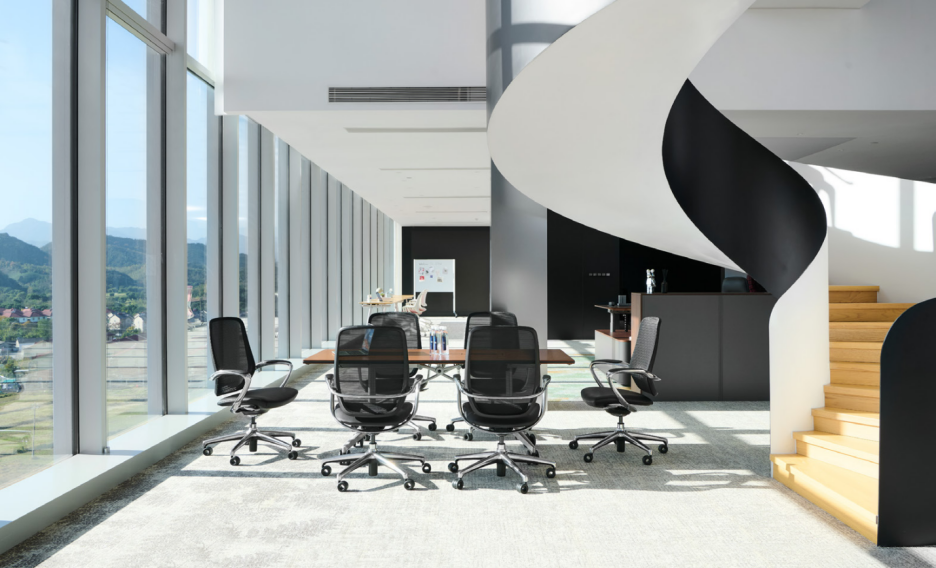
Why Upholstery Selection Is a Strategic Executive Chair Procurement Decision
Choosing between leather and mesh is not a matter of aesthetics. For procurement teams placing orders of 50 to 500 units across multiple floors or buildings, the upholstery material directly impacts specification documentation, lifecycle budgeting, supplier qualification criteria, and long-term facilities management workload.
Impact on Total Cost of Ownership Across Replacement Cycles
Leather and mesh executive chairs follow fundamentally different depreciation and replacement timelines:
- Full-grain leather — maintains acceptable condition for six to eight years with proper maintenance
- PU leather — often degrades within three to four years of daily use, requiring earlier batch replacement
- Mesh-back (high-tenacity polyester or elastomeric polymer) — commonly sustains structural tension for seven to ten years when built to BIFMA X5.1 durability standards
This difference in replacement frequency compounds significantly when scaled across 200 or more units. Procurement teams should model total cost of ownership over two full replacement cycles, not just per-unit purchase price. A lower-cost PU leather chair replaced at year four may cost 40% more over a decade than a mesh alternative with a seven-year functional lifecycle.
How Upholstery Specification Affects RFQ Documentation
The RFQ for leather chairs requires more granular material specification than mesh. For leather, document:
- Leather type (full-grain, top-grain, split, or PU)
- Thickness in millimeters
- Colorfastness rating
- Fire retardancy compliance under BS 5852 or CA TB 117-2013
For mesh, document mesh material composition, tensile strength rating, denier count, and frame attachment method. Failure to specify these parameters invites substitution risk, where suppliers deliver visually similar but structurally inferior product.
Both categories require BIFMA X5.1 or EN 1335 compliance documentation as part of the submittal package. Any executive chair specified for eight or more hours of daily seated use must include test certification for structural durability, stability under load, and mechanism cycle life.
Batch Consistency Across Multi-Floor Corporate Rollouts
Color and texture consistency is a greater procurement risk with leather than mesh. Natural leather varies by hide, and even synthetic PU leather can shift in shade between production batches. Teams managing multi-phase rollouts need to confirm the supplier’s batch-matching capability before committing to a phased PO schedule.
Manufacturers like Onmuse that maintain documented finish codes and material batch tracking across production runs give procurement teams a reliable quality reference point for phased delivery across buildings or project stages.
Mesh presents fewer batch consistency challenges because polymer-based mesh is manufactured to tighter color tolerances. However, frame powder-coat finish and armrest material can still vary if not controlled at the supplier level.
Leather Executive Chairs: Material Grades, Durability, and Procurement Specs
Leather remains the default specification for C-suite offices, boardrooms, and client-facing meeting spaces. The procurement challenge is distinguishing between contract-grade leather that justifies its cost and consumer-grade material that will not survive institutional use cycles.
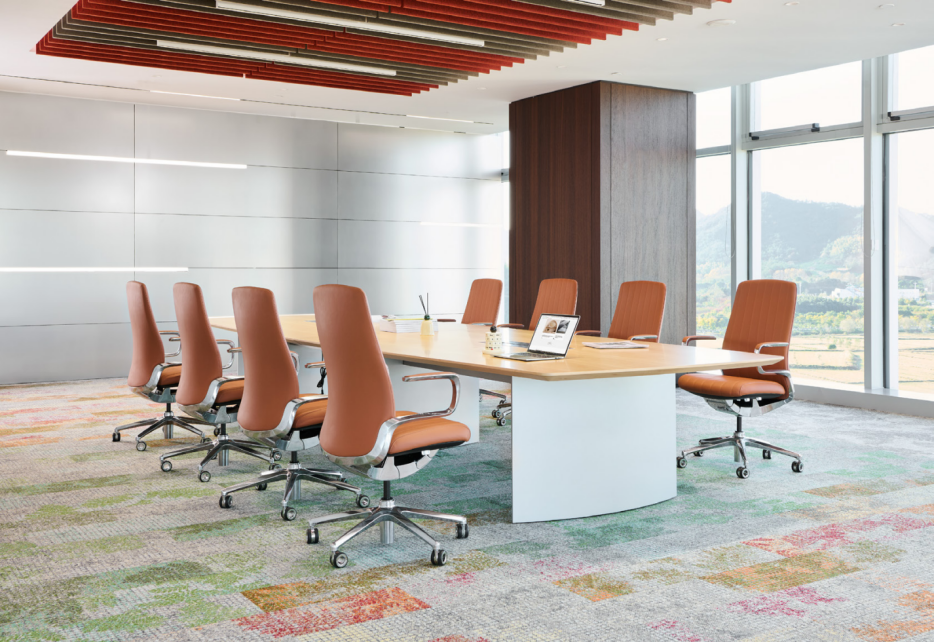
Full-Grain Leather vs PU Leather for Contract-Grade Seating
Full-grain leather retains the hide’s natural surface and develops a patina over time rather than peeling or cracking. It typically exceeds 50,000 cycles in Martindale abrasion testing and performs well under consistent climate control — but carries a cost premium, often two to three times the per-unit price of PU leather at institutional volumes.
PU leather (polyurethane-coated fabric) mimics the appearance of leather at a fraction of the cost but degrades faster under sustained body heat and friction. In corporate settings with eight or more hours of daily use, PU leather commonly begins to crack or peel within 24 to 36 months. Treat it as a short-lifecycle specification, appropriate only for low-use visitor chairs or budget-constrained interim seating.
Top-grain and corrected-grain leather represent a middle tier. For institutional procurement, specifying a minimum leather thickness of 1.0mm to 1.2mm and a Martindale abrasion rating above 40,000 cycles provides a defensible baseline for contract-use environments.
Durability and Wear Performance in Extended Daily Use
Beyond surface material, leather chair procurement should account for seat foam specification. Contract-grade chairs should use molded polyurethane foam with a density of 45 to 55 kg/m³ for the seat cushion. Foam below 40 kg/m³ compresses permanently within 18 to 24 months of daily use, regardless of the leather quality above it.
The mechanism beneath the seat also determines long-term performance. A synchronized tilt mechanism with tension adjustment and a Class 4 gas lift cylinder rated for 100,000 or more actuation cycles is the minimum specification for executive chairs intended for eight-hour daily use over a five-to-eight-year lifecycle.
Maintenance Protocols and Associated Cost Planning
Leather executive chairs require periodic conditioning to prevent drying, cracking, and staining — typically professional cleaning and conditioning every six to twelve months per chair. At scale, for 100 or more units, this maintenance cost adds meaningfully to the total lifecycle budget.
Spill and stain management is also more complex with leather. Untreated spills can permanently discolor natural leather, and many cleaning agents can strip protective coatings if incorrectly applied. Procurement teams should factor annual per-unit maintenance cost into the lifecycle model when evaluating leather against mesh.
Mesh Executive Chairs: Construction Standards, Breathability, and Lifecycle Performance
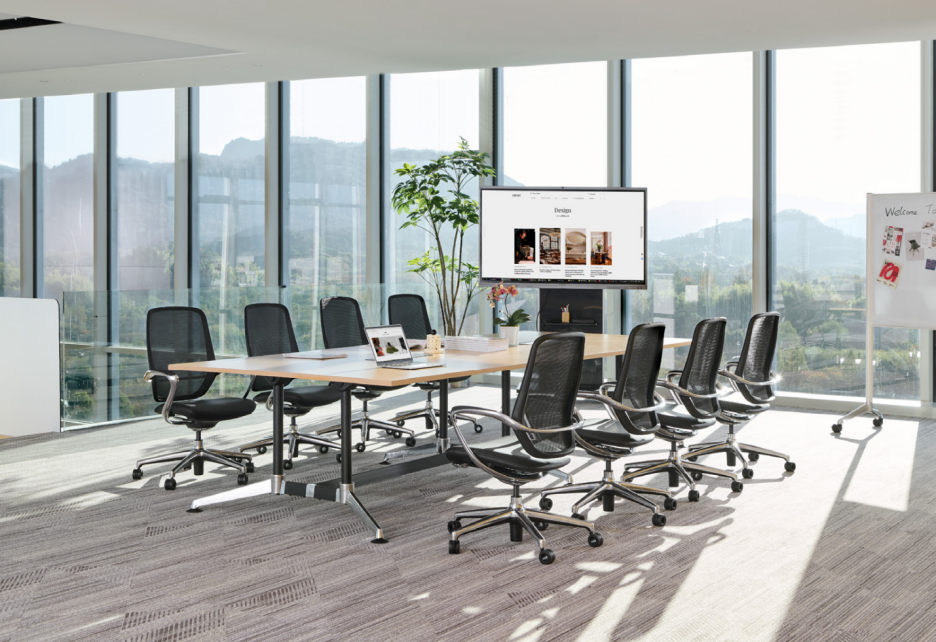
Mesh-back executive chairs have become the dominant specification for corporate environments where thermal comfort, low maintenance, and long replacement cycles take priority over traditional boardroom aesthetics.
Mesh Grade and Tension Specifications for Institutional Procurement
Not all mesh is equivalent in contract-use performance. Specifications should identify mesh material type (woven polyester, knit elastomeric polymer, or thermoplastic polyester elastomer), denier count, and tensile strength rating. High-performance mesh used in contract seating typically has a denier count above 600 and maintains consistent tension after 100,000 or more flex cycles.
Low-cost chairs with thin, loosely woven mesh will sag or tear within 12 to 18 months in an eight-hour daily-use environment. Welded or mechanically fastened mesh outperforms adhesive-attached mesh in long-term durability.
High-back mesh ergonomic chairs from Onmuse reflect contract-grade construction with frame-integrated mesh tension systems designed for sustained institutional use.
Structural Frame and Mechanism Requirements
Mesh chairs rely on the frame to provide structural rigidity that leather chairs partially derive from seat cushion construction. The back frame should be reinforced nylon (glass-fiber-filled PA66) or die-cast aluminum, with no flex points that could fatigue under daily reclining loads.
The mechanism should meet BIFMA X5.1 Section 8 durability requirements, including 100,000-cycle tilt mechanism testing and 90kg static load testing for seat and back. For executive applications, a synchronized tilt mechanism with lockable recline positions and adjustable tension control is standard.
Armrest construction also differs. Mesh chairs more commonly feature height- and width-adjustable armrests with PU-padded tops, which should be specified at a minimum of 60mm pad width for comfortable forearm support during extended use.
Cleaning and Maintenance Advantages Over Leather
Mesh chairs require significantly less maintenance than leather. Dust and particulate matter can be removed with standard vacuuming, and most mesh materials resist staining from skin oils and perspiration. In a 200-unit deployment, eliminating annual leather conditioning can save thousands in recurring maintenance costs.
For procurement teams managing facilities budgets, the maintenance cost differential alone can offset the per-unit price gap between mesh and leather within the first two to three years of the chair’s lifecycle.
Scenario-Based Decision Criteria for Corporate Procurement Teams
The optimal upholstery choice depends on the specific office environment, user type, and organizational standards. Procurement teams should map upholstery decisions to workplace zones rather than applying a single specification across the entire project.
Executive Suites and Client-Facing Conference Rooms
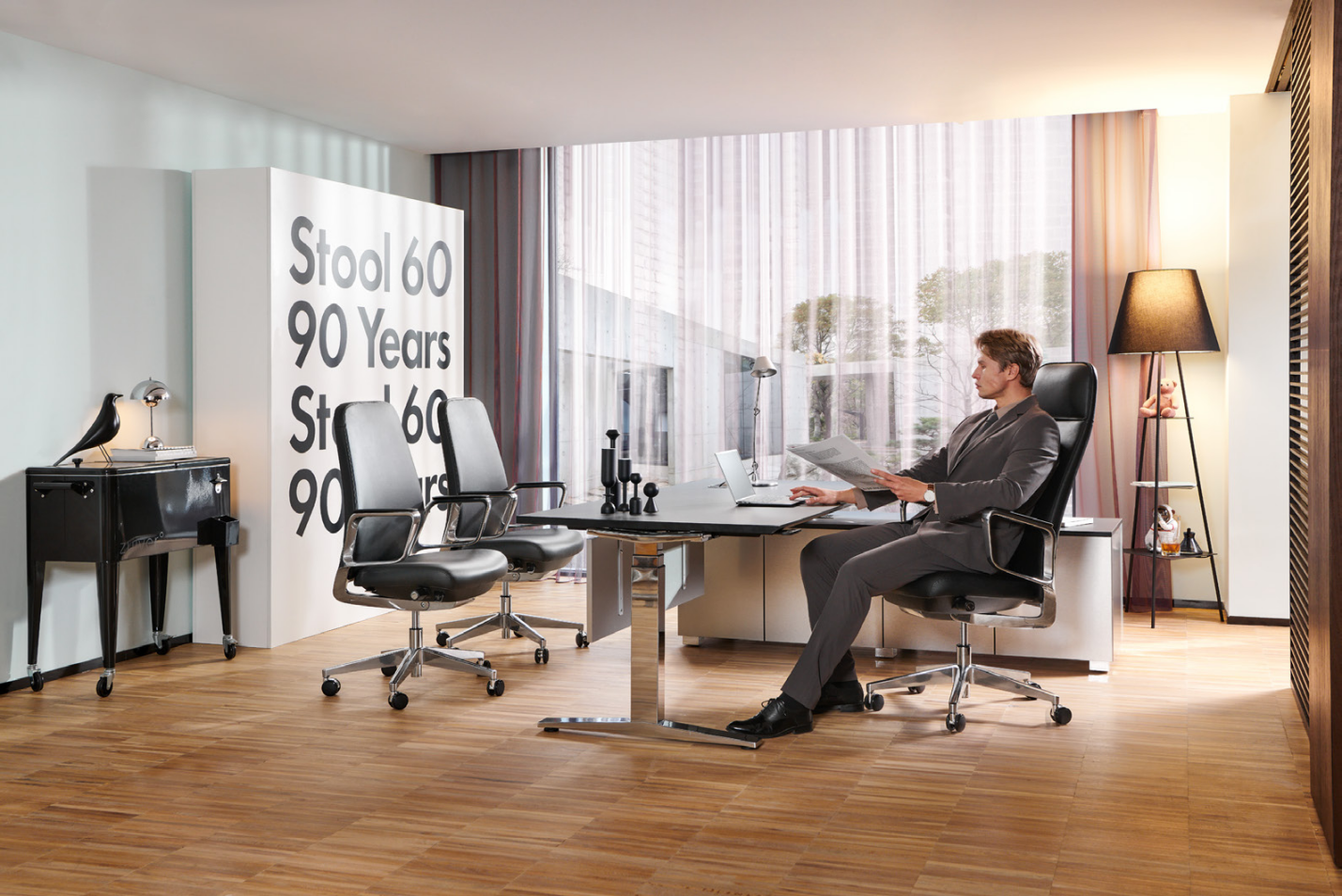
Full-grain or top-grain leather remains the standard specification for CEO, CFO, and board-level offices where the seating communicates organizational stature. Here the rationale for leather is tied to finish expectations and brand presentation rather than ergonomic performance alone.
For boardrooms and client-facing meeting rooms, leather visitor and conference seating aligns with the visual standard set by the executive desk and credenza. Specify matching leather grade and color code across executive and visitor seating to maintain visual consistency within the suite.
Open-Plan Workstations and High-Density Environments
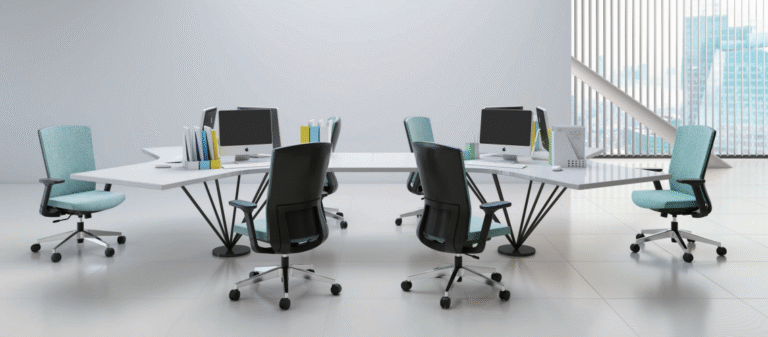
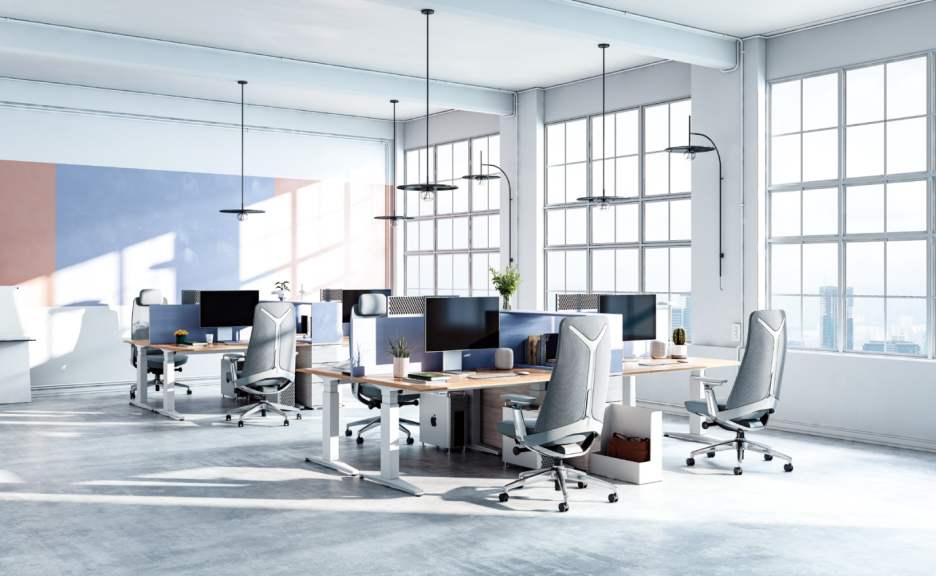
Mesh is the recommended specification for open-plan environments where 50 or more chairs operate in a shared HVAC zone. Breathability reduces heat buildup, and the lower maintenance requirement keeps facilities workload manageable at scale.
An ergonomic chair with lumbar support in mesh construction is a practical specification for workstation seating where thermal comfort and adjustable support outweigh executive finish expectations.
Mixed-Use, Hot-Desking, and Shared Workspace Configurations
Hot-desking and shared workspaces present the harshest use conditions for any chair. Multiple users per day with varying body weights and postures accelerate wear on both upholstery and mechanisms.
Mesh outperforms leather in shared environments because it resists body-oil transfer, does not absorb perspiration, and tolerates frequent user changes without surface degradation. An ergonomic office chair with adjustable waist support provides the adjustability range needed for multi-user environments where no single ergonomic preset is sufficient.
Total Cost of Ownership: Leather vs Mesh Over a 5 to 8 Year Lifecycle
Per-unit purchase price is an incomplete basis for procurement decisions. Lifecycle cost analysis must account for maintenance, repair, component replacement, and disposal across the full expected service life.
Per-Unit Procurement Cost at Scale
At institutional order volumes of 100 to 500 units:
- PU leather — typically $150 to $350 per unit
- Full-grain leather — $400 to $900 per unit depending on grade, mechanism, and customization
- Contract-grade mesh — $200 to $600 per unit depending on mesh material, frame, and adjustment features
The per-unit gap between mesh and full-grain leather narrows at higher specification levels where mesh chairs include advanced synchronized mechanisms and aluminum frames.
Maintenance, Repair, and Component Replacement Projections
Over a seven-year lifecycle, leather chairs incur approximately $30 to $60 per unit annually in conditioning, cleaning, and minor repair. PU leather chairs requiring full replacement at year three or four effectively double the per-unit cost over the same period.
Mesh chairs incur minimal annual maintenance — typically under $10 per unit for periodic vacuuming and mechanism lubrication. The primary repair is gas lift cylinder replacement, occurring once during a seven-to-ten-year lifecycle at $15 to $30 per unit including labor.
Disposal, Residual Value, and End-of-Life Planning
Leather chairs retain marginally higher residual value at end of life due to material perception, but this advantage is negligible at institutional scale. Mesh chairs are generally easier to disassemble for recycling, with separable plastic, metal, and textile components that align with corporate sustainability reporting requirements.
Procurement teams should confirm whether the supplier offers take-back or recycling coordination as part of the initial contract, particularly for orders exceeding 200 units where disposal logistics become a meaningful cost line.
Supplier Evaluation and Documentation for Bulk Executive Chair Orders
Regardless of upholstery type, the supplier’s documentation package, production capability, and post-delivery support determine whether a bulk executive chair order succeeds or creates ongoing facilities management problems.
Material Certification and Upholstery Testing Documentation
Every executive chair supplier should provide, at minimum:
- BIFMA X5.1 or EN 1335 test reports
- Foam density certification
- Fire retardancy compliance (CA TB 117-2013 or BS 5852)
- Upholstery abrasion test results (Martindale or Wyzenbeek method with cycle count)
For leather chairs, document leather type, origin, thickness, and colorfastness rating. For mesh chairs, include tensile strength testing and mesh flex cycle data in the submittal package.
Warranty Structure and Spare Parts Availability
A meaningful warranty for contract-grade executive chairs should cover the frame and mechanism for a minimum of five years and the upholstery or mesh for two to three years. Gas lift cylinders and casters should carry at least a two-year warranty.
Equally important is spare parts availability. Confirm whether the supplier stocks replacement gas lifts, armrest pads, casters, and mechanism components for the specific model for at least five years after the order date.
Lead Time, MOQ, and Phased Delivery Planning
Standard lead times for bulk orders range from four to eight weeks depending on customization and production load. Orders requiring specific leather colors or custom mesh tension may extend to ten to twelve weeks.
MOQ flexibility matters for phased rollouts. A supplier requiring 500-unit minimums is unsuitable for a project needing 80 chairs per floor across six delivery phases. Verify phased-PO acceptance and confirm that material specification — particularly leather batch and mesh lot — will remain consistent across all delivery stages.
Choosing the Right Executive Chair for Your Workplace
Selecting between leather and mesh executive chairs depends on your office environment, maintenance expectations, budget, and long-term procurement goals. Leather is ideal for executive offices and client-facing spaces, while mesh offers better breathability and lower maintenance for open-plan workspaces.
By evaluating both lifecycle cost and workplace requirements, procurement teams can choose the most suitable solution for their projects. Explore the executive chair collection or contact our team to discuss the right seating solution for your next office project.
FAQs about Executive Chairs
Q1. What are the key durability differences between leather and mesh executive chairs?
Full-grain leather executive chairs typically last 6–8 years with proper maintenance, while contract-grade mesh chairs can maintain performance for 7–10 years when built to BIFMA X5.1 durability standards.
Q2. How do maintenance costs compare between leather and mesh over a five-year period?
Leather requires regular conditioning at $30–$60 per unit annually, while mesh needs only basic cleaning at under $10 per unit. Mesh is generally the more cost-effective option for large office projects.
Q3. In which corporate environments is leather upholstery more appropriate than mesh?
Leather is ideal for executive offices, boardrooms, and client-facing meeting spaces where a premium appearance matters. Explore the executive chair collection for different workplace applications.
Q4. What mesh specifications should procurement teams require for contract-grade chairs?
Choose contract-grade mesh with a denier count above 600, high tensile strength, a reinforced nylon or aluminum frame, and BIFMA-compliant performance. Learn more about Onmuse’s quality standards and manufacturing process.
Q5. How should procurement teams budget differently for leather vs mesh bulk orders?
Consider not only the initial price but also maintenance costs, replacement frequency, and overall lifecycle value. A cheaper PU leather chair can cost 40% more over a decade than a longer-lived mesh alternative.
Q6. What supplier documentation should confirm upholstery material grade for institutional orders?
Suppliers should provide BIFMA or EN certification, upholstery abrasion test reports, foam density data, and fire-resistance documentation (CA TB 117-2013 or BS 5852).
Q7. What is the typical lifespan difference between full-grain leather and PU leather chairs?
Full-grain leather generally lasts 6–8 years with proper care, while PU leather is better suited to a shorter 3–5 year replacement cycle. The right material depends on project requirements and budget.
Q8. How does office climate affect the choice between leather and mesh executive chairs?
Mesh provides better airflow for warm or shared office environments, while leather offers a premium look for executive spaces. Contact our team for recommendations based on your office environment and project needs.