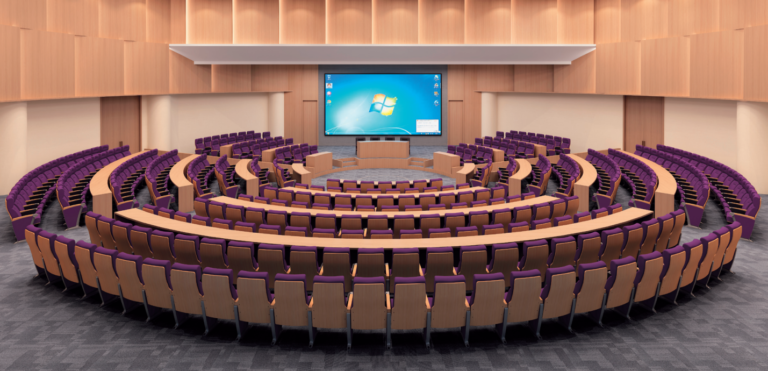
Office Furniture Procurement & Specification Guide for Corporate Projects
Mismatched furniture specifications create immediate project risk—especially in corporate office environments where schedules and dependencies are tight. Vague size tolerances, incorrect power integrations, and incompatible components routinely lead to installation delays, cost overruns, and post-rollout complaints. A disciplined office furniture procurement process converts these risks into documented, verified project specifications.
This approach moves beyond catalog numbers and “looks right” selections to require clear measurements, functional adjacencies, and performance validations. It emphasizes coordinating work surfaces with seating, storage, and infrastructure so every delivered piece fits the planned space and use case. The objective is a clean installation that meets schedule, budget, and operational requirements from day one—without relying on assumptions.
Defining Office Furniture Procurement Requirements for Corporate Projects
Getting requirements correct at the start prevents the most common and expensive procurement failures. In corporate-scale office projects, this phase is where broad needs are converted into measurable requirements that vendors can bid accurately. Clear, documented requirements reduce mismatched furniture, unexpected field modifications, and avoidable change orders.
Facility Audit and As-Built Documentation
Begin with measured, current conditions—not legacy drawings. Verify everything on site and document it. Record exact room dimensions, door swings, and window locations. Mark precise locations of all electrical outlets, data ports, and HVAC vents. Note immovable obstacles such as columns and soffits. This verified “as-built” plan must serve as the single source of truth for procurement decisions, preventing furniture from blocking egress, failing to fit, or triggering costly rework.
User Profiles and Functional Zoning
Group staff by how they work (not by job title alone). Create simple user profiles—for example, a “Focused Task Worker” who requires a quiet desk for two monitors, or a “Collaborative Manager” who needs a primary desk plus an adjacent meeting surface. Map these profiles into zones on the floor plan, grouping teams and separating noisy from quiet areas. In commercial office deployments, zoning decisions directly dictate what is purchased and where it installs; weak zoning is a common upstream cause of downstream dissatisfaction.
Verifying Manufacturer Documentation and Capabilities
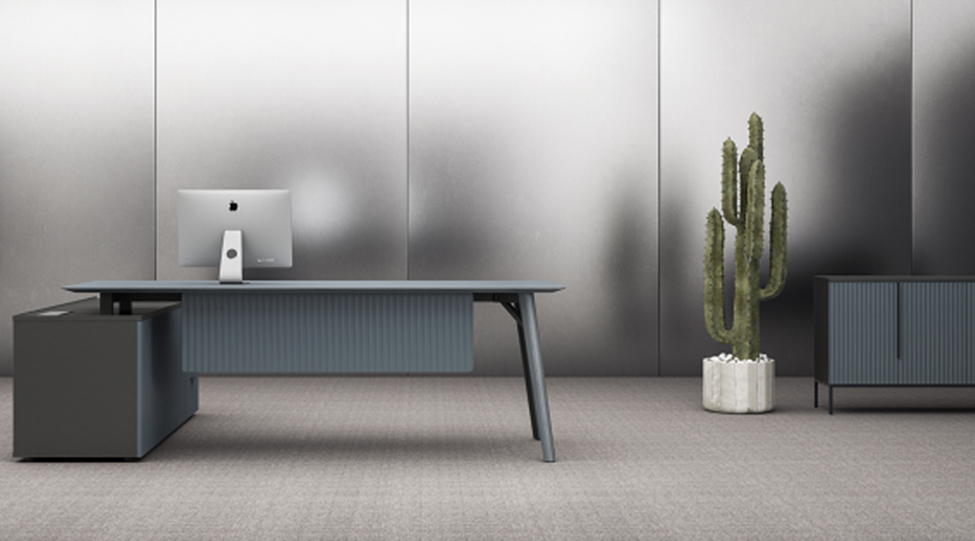
A catalog image is not a specification. Procurement should require documented spec sheets that list exact dimensions, materials, and referenced factory testing standards. Where items are custom, specifications should be supported by engineering drawings and/or prototypes prior to production. This verification step confirms the manufacturer’s capability and establishes a measurable benchmark for delivery acceptance. Understanding production and quality-control processes also helps evaluate supplier reliability for corporate-volume orders.
Office Furniture Procurement Ergonomic Specifications Buyers Should Require
Ergonomic performance should be specified as verifiable requirements, not subjective comfort claims. In long-term facility use, procurement errors here become operational risk (strain complaints, reduced usability, and early replacements). The goal is objective criteria that can be documented, checked, and enforced through submittals and certifications.
Adjustable Ranges for Chairs and Desks
Ergonomics is driven by adjustability and fit across a diverse workforce. Specifications should require:
- Office chairs must include: seat height adjustment 17–21 inches, seat depth adjustment 2–3 inches, an adjustable lumbar backrest, and 4D adjustable armrests.
- Desks should be specified as electric sit-stand models that transition smoothly between seated heights of ~25 inches and standing heights of ~50 inches to support postural alternation.
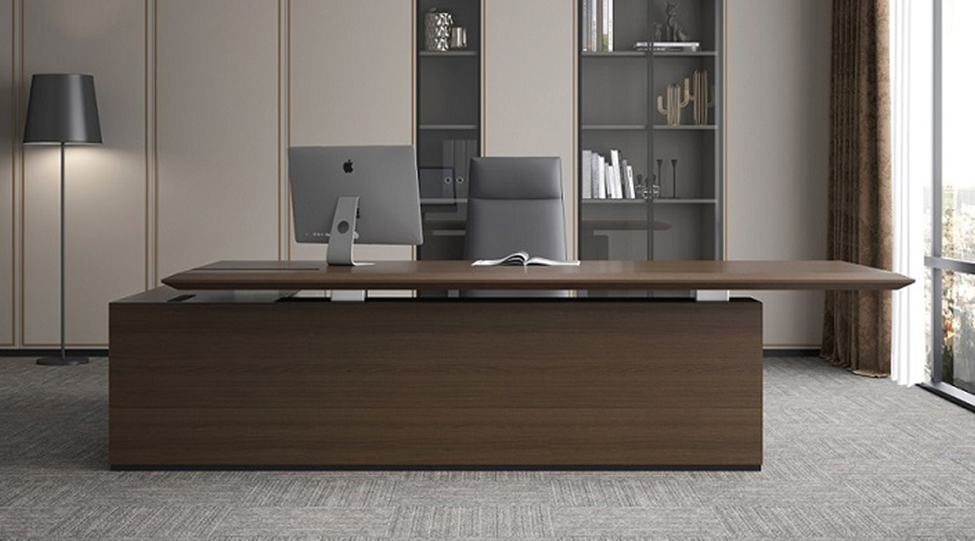
These ranges should be treated as minimum functional requirements for commercial office environments where multiple body types and work styles must be accommodated.
Mandating ANSI/BIFMA and GREENGUARD Compliance
Third-party certification is the control mechanism that turns claims into verified performance.
- ANSI/BIFMA X5.1 for chairs should be non-negotiable in corporate procurement. It includes cycle testing for seats, backrests, and casters.
- Products should be listed in the official BIFMA Compliant® Product Registry, and the listing should be verified for the exact model being specified.
- For indoor air quality, procurement should mandate UL GREENGUARD Gold Certification (tested for more than 360 VOCs). Certification status must be confirmed as active and applicable to the specific product model, not just the brand line.
Office Furniture Procurement Verification: Durability and Quality Standards
Durability verification is a financial safeguard. The procurement objective is to confirm that products will perform under the project’s actual use conditions (high traffic, frequent reconfiguration, long service life) and avoid the operational and replacement costs associated with premature failure.
Analyzing Warranty and Service Life
Warranty language should be evaluated as a contractual performance commitment, not a marketing label. A “10-year warranty” should explicitly cover the frame, mechanisms, and moving parts for the full stated term. It must also apply to commercial/contract use (not residential-only coverage). Procurement should verify the service model in advance: on-site service vs. parts-only replacement, response timelines, and exclusions. In corporate procurement, a comprehensive commercial-grade warranty aligned with a 7–10 year asset life is typically a strong indicator of quality and lifecycle value.
Inspecting Construction and Material Specs
Specifications should require documented evidence of robust construction.
- For seating, request frame material details (e.g., steel or polymer composites).
- For desks, verify steel gauge and whether connections are welded or bolted.
- Work surfaces should meet specified wear performance, including a documented Abrasion Resistance rating of AC3 or AC4.
- For chairs, request mechanism cycle test ratings of at least 200,000 cycles.
- For fabrics, specify a minimum of 100,000 double rubs for general commercial use.
In corporate office environments, these construction details should be treated as submittal requirements that can be checked prior to order release.
Office Furniture Procurement Budgeting and Total Cost of Ownership
Effective budgeting is a procurement discipline, not just cost containment. Start with priority-based allocation by dividing budgets into tiers for core productivity, professional presentation, and collaborative spaces. A phased implementation strategy can align investment with cash flow and reduce disruption during occupancy transitions.
The relevant financial metric is Total Cost of Ownership (TCO), not unit price. Lower-cost products often generate higher TCO because they fail sooner or require more service. TCO should include indirect project costs that can inflate totals by 15–25 percent, including logistics, installation, taxes, and maintenance. A documented, comprehensive warranty is often a practical proxy indicator of lower long-term ownership costs.
Office Furniture Procurement Selection by Work Function and Space Type
Furniture selection should be driven by task requirements and space constraints. Specifying by function improves productivity outcomes and reduces wasted space—especially important in corporate real estate where density and flexibility are constant pressures.
Specifying Individual Workstation Requirements
Individual workstations must support focused, technology-enabled work. Procurement specs should require work surfaces with sufficient depth for multiple monitors, integrated cable management, and acoustic panels where privacy is needed. Match requirements to job function. For example, a data analyst may require a larger fixed-height desk, while a hybrid manager may benefit from a smaller, height-adjustable office workstation. The key is that each workstation type should be procurement-defined with measurable requirements rather than ad hoc selection.
Selecting Collaborative and Meeting Furniture
Collaboration furniture should be specified for flexibility and durability. Prioritize lockable casters, reconfigurable tables, and commercial-grade soft seating designed for frequent movement. For formal meeting spaces, specify tables with hard-wearing surfaces and integrated power/data access where required. In multi-team corporate environments, furniture that cannot withstand routine rearrangement becomes an early failure point.
Office Furniture Procurement Layout Planning: ADA, Clearances, and Infrastructure Coordination
A successful layout supports compliance, safety, and infrastructure integration. This phase must coordinate furniture footprints with clearance requirements and building systems so procurement does not outpace site readiness.
Ensuring ADA Clearance and Egress
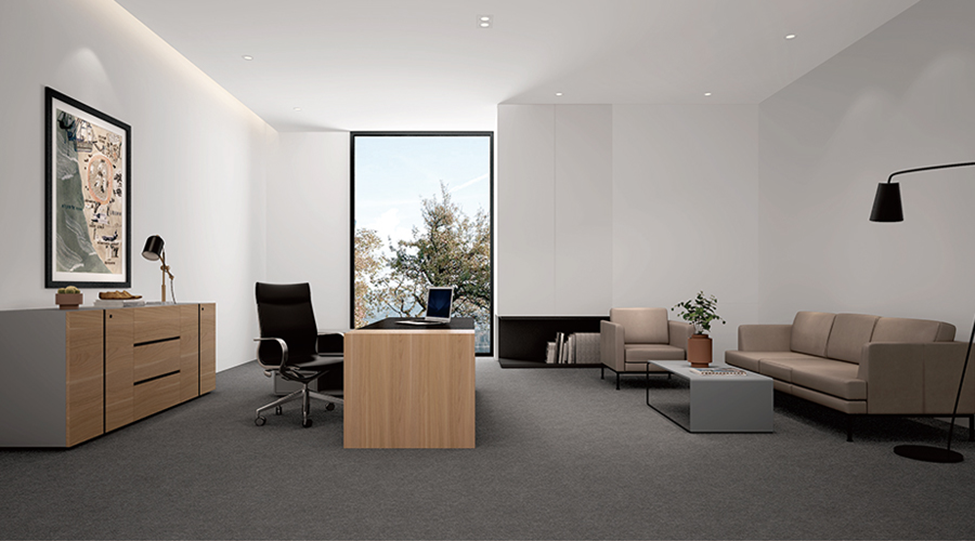
ADA compliance is mandatory and must be validated during layout planning. Primary circulation paths must maintain a minimum clear width of 36 inches. For accessible workstations, ensure clear floor space and unobstructed knee clearance under desks measuring 27 inches high, 30 inches wide, and 19 inches deep. In corporate projects, a physical mock-up is often the most reliable way to verify clearance assumptions before purchase orders are finalized.
Coordinating Power and Data Access
Furniture placement should be verified against power and data availability. Overlay furniture layouts with electrical plans to confirm outlet quantity and location. Procurement should require furniture systems with integrated cable management (e.g., raceways) to control hazards and support clean installation. This reduces the common project risk of furniture arriving without the infrastructure required for compliant, functional use.
Typical Office Furniture Procurement Timeline for Corporate Projects
Procurement is a dependency-driven process. A realistic timeline should reflect each stage and include buffer time for review cycles, approvals, production scheduling, and shipping variability—especially for corporate projects with fixed move-in dates.
Key Stages from Specification to Installation
The lifecycle typically begins with requirements definition and specification, followed by supplier selection and submittal approval. The critical path often includes manufacturing lead time—commonly 6–12 weeks for custom items—followed by logistics and installation. Each stage should require formal stakeholder approval before progressing to reduce late changes and schedule slips.
Managing Lead Times and Multi-Site Rollouts
For multi-site rollouts, procurement should follow a phased strategy with staggered orders and coordinated schedules against a master timeline. A pre-order logistics assessment should verify constraints such as elevators, stairwells, and doorways. In commercial deployments, using a single coordinated service provider can reduce handoff risk, but the core control remains the same: documented lead times, confirmed site readiness, and verified installation sequencing.
Office Furniture Procurement Sustainability and ESG Documentation Verification
Sustainable procurement requires documentation that supports ESG reporting and compliance. Claims should be treated as unverified until supported by current, applicable third-party documentation.
Requesting and Reviewing EPDs and HPDs
Procurement should require third-party verified Environmental Product Declarations (EPDs) and Health Product Declarations (HPDs) where applicable. EPDs quantify environmental impacts, while HPDs disclose material ingredients. These documents provide standardized, comparable data for evaluating products across suppliers.
Validating Sustainability Claims
Sustainability claims should be accepted only when supported by active certifications that apply to the specified product model. Require:
- FSC certification for applicable wood products
- GREENGUARD Gold for indoor air quality
- BIFMA LEVEL for holistic sustainability assessment
Certification status should be verified as current and applicable to the exact model/line item being procured.
Office Furniture Procurement Planning for Flexible and Modular Systems
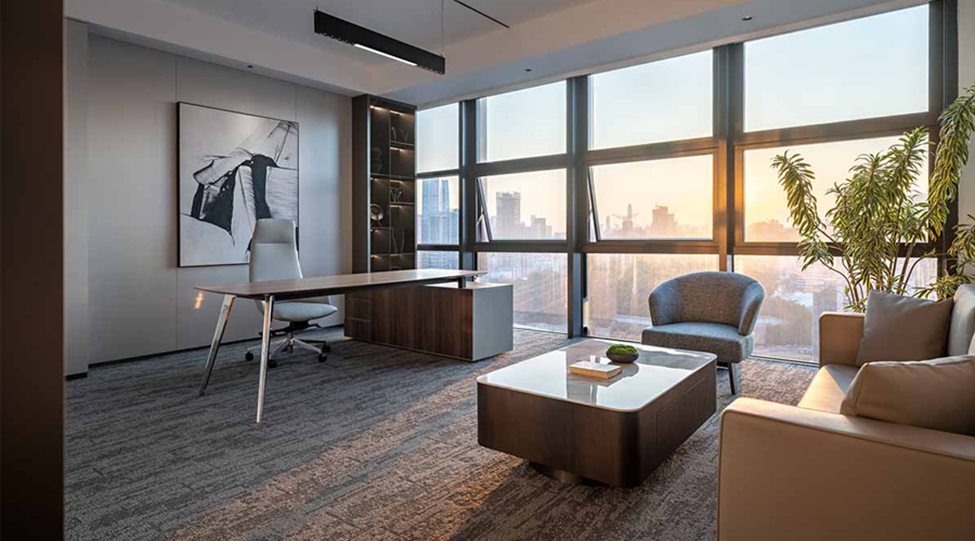
Modular systems reduce long-term churn costs and support future reconfiguration. In corporate environments with organizational change, flexibility is a lifecycle requirement—not an aesthetic preference.
Evaluating Reconfigurable Solutions
Evaluate system interoperability and require clarity on what is truly modular versus merely “movable.” Specify movable partitions, modular benching, and standardized storage where appropriate. The core evaluation criteria should remain scalability and the durability of connectors that must withstand repeated reconfiguration in commercial use.
Specifying Height-Adjustable Desks
Height-adjustable desk specifications should be defined as technical requirements. Select between electric drive systems (programmability and higher lifting capacity) and pneumatic systems (often more cost-effective for shared areas). Key criteria should be documented and verified, including lifting range, noise level, and stability under load. For further technical guidance, review resources on height-adjustable desks.
Office Furniture Procurement Installation, Inspection, and Quality Assurance
The closeout phase ensures what arrives and installs matches what was specified and approved. In corporate projects, disciplined inspection prevents “accepted by default” outcomes that are costly to correct after occupancy.
Conducting Pre-Installation Site Checks
Site readiness must be confirmed before installation crews arrive. Verify as-built measurements against plans, mark outlet locations, and confirm building logistics such as loading dock access and elevator availability. Skipping this verification step is a frequent cause of installation-day failures and partial installs.
Executing Final Punch List and Tagging
Closeout should be controlled through a punch list and asset tagging. The punch list documents deficiencies that must be corrected prior to final payment. Major furniture items should receive an asset tag tied to a record of model, serial number, warranty coverage, and physical location. This process resolves remaining issues and establishes an inventory baseline for ongoing facility management.
Procurement FAQs
What are the common causes of office furniture procurement delays?
Inaccurate space plans, unverified manufacturer lead times, and missing site readiness checks are frequent causes—especially in corporate environments with multiple stakeholders and dependencies. Delays are typically reduced through verified as-builts, documented lead times, and formal approval gates at each procurement stage.
How do buyers evaluate durability for high-traffic environments?
Durability should be evaluated using documented commercial-grade specifications and valid BIFMA test reporting where applicable. Compare warranty scope (what is covered and for how long), service terms (on-site vs. parts-only), and expected service life against initial cost to evaluate total value rather than price alone.
What documents should buyers request from manufacturers?
Request documented specification sheets, test reports, finish samples, evidence of custom manufacturing capability where relevant, and installation guidelines. For critical items, require material submittals and approval prior to production release to prevent mismatches between specified and delivered products.
Conclusion
Successful office furniture procurement is fundamentally a risk-management discipline. It depends on a specification-driven, verification-based process where each phase—from facility audit to final punch list—functions as a control point to reduce rework, budget overruns, and schedule delays. With clear requirements and documented verification, complex corporate projects become measurable and predictable. The result is a functional, compliant, durable workplace asset that delivers long-term value.
If project support is needed, procurement teams typically request product submittals and quotes from qualified contract furniture suppliers based on the approved specification set.
1-768x431.png)