
Specification and Procurement of the Ergonomic Office Chair for Commercial Projects
Selecting ergonomic seating for large-scale commercial environments requires a different approach than choosing a chair for individual preference. In B2B projects, procurement managers, dealers, and facilities teams are evaluating seating as a long-term operational asset. The right chair must perform reliably across hundreds of workstations, support users through extended work hours, and maintain consistency in appearance and function across the entire project.
In real workplace fit-outs, office seating affects more than comfort. It can influence maintenance frequency, workstation uptime, replacement planning, and the overall efficiency of a facility. For that reason, specifying an ergonomic office chair for commercial use is ultimately a procurement decision grounded in durability, compliance, serviceability, and lifecycle value.
Procurement Requirements for High-Density Commercial Seating

Successful commercial procurement balances current project requirements with long-term operational needs. For procurement teams, the objective is not simply to source an attractive chair, but to identify a seating solution that can stand up to daily use while aligning with budget, maintenance expectations, and workplace standards.
Project Scope and Usage Intensity Planning
In real projects, seating specification should begin with a clear assessment of usage intensity. A standard administrative office, a collaborative hot-desking area, and a multi-shift operations environment will each place different demands on chair mechanisms and materials. Procurement teams should verify that the proposed seating is designed for commercial duty cycles, with gas lifts, bases, and tilt systems intended for repeated daily use rather than occasional residential-style use.
Evaluating Total Cost of Ownership for Seating
The purchase price is only one part of the cost equation. In commercial environments, total cost of ownership includes expected service life, maintenance requirements, availability of replacement parts, warranty terms, and the operational disruption caused by chair failure. In practice, a chair with a higher upfront cost may deliver better value if it reduces downtime, lowers replacement frequency, and performs consistently over many years.
Scaling Consistency Across Multi-Floor Workspaces
Large office projects often require consistency across departments, floors, or phased installations. For facilities and procurement teams, standardization supports both a cohesive workplace appearance and easier asset management over time. A supplier’s ability to maintain finish consistency and product uniformity across multiple production runs is therefore an important consideration, especially for projects that may expand in later phases.
Technical Specifications for Ergonomic Chairs in Professional Settings

Commercial ergonomic seating must serve a wide range of users while performing under intensive daily use. In B2B procurement, technical features are not simply product highlights; they are performance criteria that affect usability, workforce support, and long-term reliability.
Dynamic Lumbar Support and Spinal Alignment
In professional office settings, lumbar support should respond to natural posture changes throughout the day. Dynamic support systems can help users maintain better seating posture during long periods of task work. For employers outfitting a large workforce, this type of ergonomic design supports a more practical and inclusive seating standard across the workplace.
Synchro-Tilt Mechanisms and User Movement Range
A synchro-tilt mechanism remains a strong indicator of a serious task chair for commercial use. In real workplace applications, it allows the seat and backrest to move in a coordinated ratio, supporting more natural recline while maintaining ergonomic alignment. This can help improve comfort over long sitting periods and makes the chair more suitable for intensive daily use.
Seat Depth and Height Adjustability Standards
A commercial chair should accommodate a broad user range, ideally covering the 5th to 95th percentile of the workforce. For procurement teams furnishing shared work areas, seat height and seat depth adjustment are especially important because one chair model may need to support many different users across a department or an entire office floor.
Performance Standards for Shared and Multi-Shift Environments

In hot-desking offices, contact centers, and other high-use settings, chairs are expected to perform continuously for different users throughout the day. In these environments, ease of adjustment and structural durability are just as important as ergonomic specification.
Intuitive Controls for Rapid User Adaptation
In shared workspaces, overly complicated chair controls often go unused. In real projects, chairs intended for hot-desking or flexible office layouts should allow users to understand and adjust key settings quickly. Intuitive controls make it more likely that users will actually personalize the chair for proper support.
Weight Capacity and Structural Integrity Benchmarks
Commercial buyers should confirm tested weight ratings and structural integrity before approving a seating specification. In many institutional and office projects, chairs tested to 300 lbs or higher provide a more practical benchmark for inclusive use and long-term reliability.
Maintenance Requirements for Long-Term Fleet Reliability
From a facility management perspective, chair maintenance must be efficient and predictable. Seating with replaceable parts such as arm pads, casters, or mechanisms can reduce whole-unit replacement and extend usable life. Cleanable upholstery and modular construction are also valuable in high-occupancy offices where appearance and uptime need to be maintained with minimal disruption.
Onmuse Solutions for Commercial Office Projects
For procurement teams managing broader workplace furnishing programs, sourcing from a supplier with multiple commercial furniture categories can simplify coordination and support consistency across the project. In addition to office seating, Onmuse supplies a wider range of workplace and institutional furniture solutions that can be relevant for integrated office fit-outs.
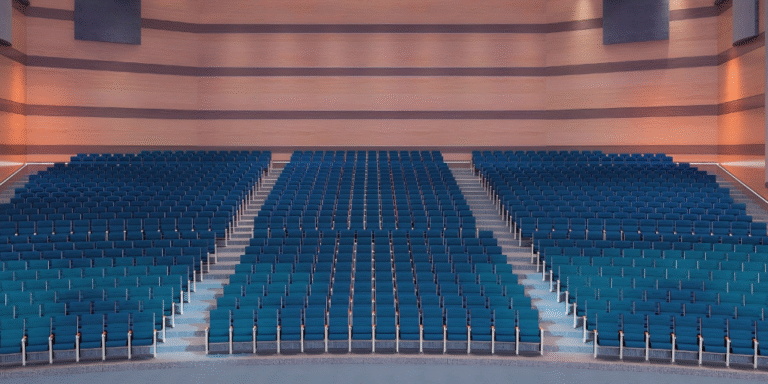
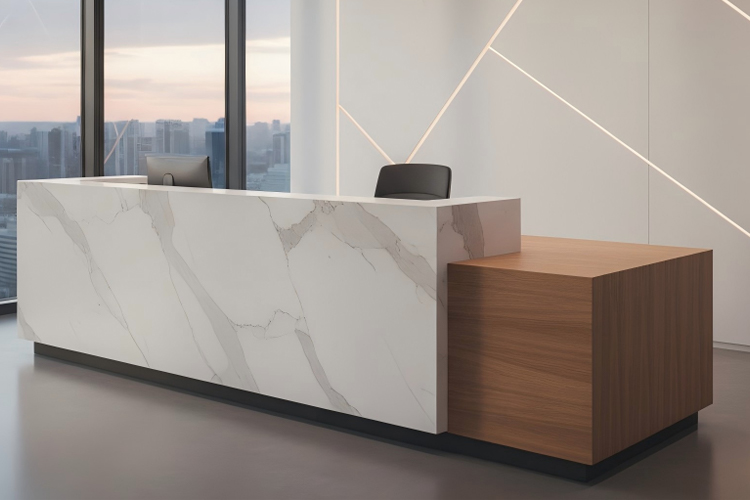
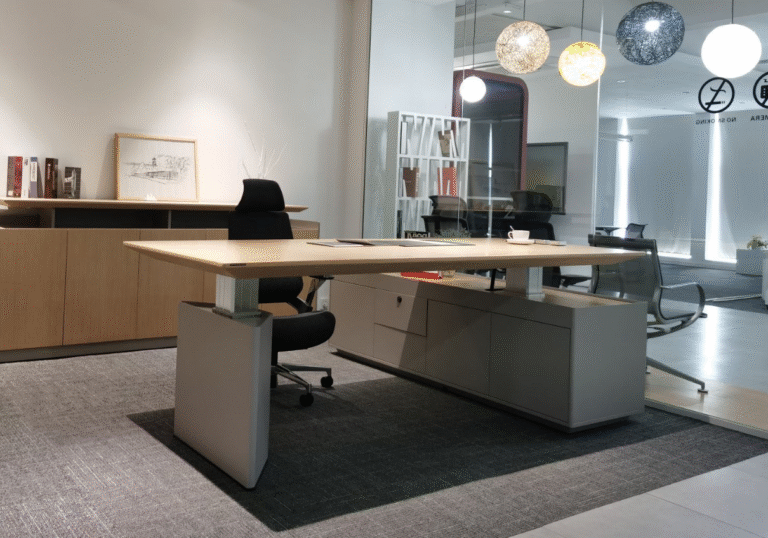
Its office furniture range includes executive desks, executive chairs, conference tables, conference chairs, and storage solutions such as 3 drawer file cabinets and wood file cabinets. For projects that also involve reception, lounge, education, or mixed-use spaces, Onmuse also offers product lines in school furniture, auditorium chairs, bunk beds, commercial and restaurant lounge seating, and dining furniture. For procurement teams, this broader category coverage can be useful when the goal is to streamline vendor management while maintaining a coordinated furniture standard across different functional zones.
Material Durability and Finish Consistency in Bulk Production

The long-term success of a commercial seating program depends on both material performance and production consistency. In large orders, small variations in upholstery, color, texture, or molded components can become highly visible once installed across an entire office.
Textile Abrasion Resistance and Contract-Grade Fabrics
For demanding office use, upholstery should meet contract-grade performance requirements. Fabrics rated above 50,000 double rubs on the Wyzenbeek scale are commonly considered suitable for commercial seating, particularly in high-use environments. In practice, procurement teams should also consider stain resistance, cleanability, and colorfastness to ensure the chairs continue to present well over time.
Component Finish Uniformity Across Production Batches
Many large projects are delivered in stages, making finish consistency a critical procurement issue. Manufacturers with stable coating, molding, and assembly processes are better positioned to maintain a uniform appearance across separate deliveries. This becomes especially important when additional chairs are ordered months after the original installation.
Environmental Sustainability and Recyclability Documentation
Sustainability documentation is increasingly relevant in corporate, educational, and institutional procurement. Buyers may request information regarding recycled material content, product disassembly, and end-of-life recyclability. Where environmental targets are part of a project brief, these details can influence supplier selection as much as price and lead time.
Certification and Compliance for Institutional Purchasing
Compliance is a core part of procurement risk management. In commercial projects, documented product testing and safety compliance help protect the buyer, support project approvals, and reduce uncertainty over long-term performance.
BIFMA and International Performance Testing Standards
BIFMA standards remain one of the most widely recognized benchmarks for office seating in commercial environments. For procurement teams, BIFMA compliance provides assurance that the chair has been evaluated for safety, strength, and durability under conditions that reflect professional use.
Fire Retardancy and Safety Compliance Documentation
Depending on the market and application, office seating may also need to meet specific fire safety requirements such as CAL 117-2013. Procurement managers should collect and verify these documents during supplier review, particularly for projects subject to building regulations, insurance requirements, or public-sector tender conditions.
Supplier Documentation and Verification
In practical procurement workflows, product documentation is often as important as the physical sample. Buyers should confirm specification sheets, test reports, warranty terms, upholstery details, and lead time commitments before final approval. Clear documentation reduces the risk of disputes and helps ensure that the delivered product matches the approved standard.
Manufacturer Capability and Project Delivery Logistics
The value of a seating specification also depends on the supplier’s ability to deliver on schedule and support the product after installation. In large office projects, manufacturing capability and logistics planning are central to controlling risk.
Production Capacity for Large-Scale Institutional Orders
For projects involving hundreds or thousands of workstations, production scale matters. Buyers should confirm that the supplier can handle required volumes without causing quality fluctuations or extended lead times. Manufacturers with stronger production control are generally better equipped to support complex or phased rollouts.
Quality Control Protocols from Factory to Installation
Structured quality control helps protect project schedules and installation quality. A reliable supplier should be able to demonstrate pre-production checks, in-process inspections, and final shipment verification. For large commercial orders, these controls reduce the likelihood of mismatched finishes, defective mechanisms, or quantity discrepancies arriving on site.
Warranty Coverage and Spare Parts Availability Planning
A strong commercial warranty contributes to long-term asset protection, but warranty language should be supported by practical spare-parts planning. Procurement teams should confirm whether components such as casters, arm pads, or mechanisms will remain available over the product’s intended lifespan. This can make a significant difference in extending the useful life of a chair fleet.
Conclusion
Specifying ergonomic office chairs for commercial projects is not simply a matter of selecting a comfortable product. It is a procurement process that must account for usage intensity, workforce diversity, durability, maintenance planning, compliance, and supplier capability. In real workplace projects, the most successful seating programs are built on verified performance standards, intuitive usability, and dependable long-term support.
For procurement teams, designers, dealers, and facilities managers, the best outcomes usually come from working with suppliers that can combine product consistency with broader project support. Alongside commercial office seating, Onmuse provides furniture solutions across executive offices, conference areas, storage applications, educational spaces, and lounge environments, making it a practical partner for organizations sourcing across multiple workplace zones.
For project inquiries or product information, Onmuse can be reached at sales@onmusefurniture.com, by phone at +86 18994397293, or via WhatsApp: +86 18994397293.
Common Questions About Commercial Ergonomic Office Chairs
Q1. What is the difference between BIFMA-tested and non-certified chairs?
BIFMA-tested chairs have undergone standardized safety and durability evaluations intended to reflect the demands of commercial use. For procurement teams, this provides a more reliable benchmark for comparing structural integrity, mechanism performance, and long-term value. Non-certified chairs may appear similar in photos or basic specifications, but they do not offer the same level of documented verification. When reviewing commercial seating from suppliers such as Onmuse, buyers should request the relevant testing and compliance documents for the exact product series being considered.
Q2. How do we calculate the ROI of high-performance ergonomic seating?
Return on investment is generally measured by comparing upfront price with expected lifespan, maintenance cost, replacement frequency, and operational disruption. For example, a chair priced at $600 and used for 10 years has a lower annual cost than a $300 chair that needs replacement every two years, even before labor, disposal, and reordering costs are added. In real projects, procurement teams should also factor in warranty support and spare-part availability. When comparing office chair options or broader workplace packages from Onmuse, it is often useful to evaluate total lifecycle value rather than unit price alone.
Q3. What should we look for in a manufacturer’s QC process for large orders?
A strong quality control process should include sample approval before production, in-line inspections during manufacturing, random batch checks, and final pre-shipment verification. For large commercial orders, these steps help ensure consistency in finish, function, dimensions, and packaging across the full shipment. Buyers should also look for clear documentation that supports each stage of inspection. When sourcing office furniture across multiple categories, such as executive chairs, conference chairs, and storage from Onmuse, consistent QC processes become even more important for maintaining quality throughout the project.