
Sourcing Ergonomic Office Chairs for Large Commercial Projects: Procurement and Specification Workflow
When sourcing ergonomic office chairs for large commercial projects, procurement teams must consider more than just product features. Seating specifications must accommodate a diverse workforce, production batches must remain consistent across large orders, and delivery schedules must align with installation timelines.
For facilities managers and project teams, office chair sourcing becomes a procurement and project coordination task rather than a simple product purchase. This article outlines the key factors procurement teams should evaluate when sourcing ergonomic office chairs for large commercial environments.
sourcing ergonomic office chairs at Project Scale
Volume introduces production, logistics, and consistency variables that standard purchasing processes are not designed to handle. Understanding where project-scale sourcing diverges from routine purchasing is the first step toward building a reliable procurement plan.

Project Scope and Usage Planning
Start by mapping the requirement beyond headcount — break the order down by floor, department, and usage pattern. A shared hot-desking zone where 80 chairs serve 200 rotating users demands wider adjustability ranges and higher duty-cycle mechanisms than an assigned-seat floor. This distinction directly shapes the mechanism grade, quantity buffers, and spare-parts plan. Getting scope wrong cascades into every downstream decision.
Lead Time Planning for Bulk Chair Orders
An order of 500 chairs introduces batch scheduling, raw material procurement, and container-loading logistics that smaller orders never touch. Most large projects use staggered delivery tied to the fit-out schedule — chairs arriving before flooring is done get damaged, and chairs arriving after the install team has left get stacked in corridors. Coordinating delivery milestones with the general contractor’s schedule protects both the product and the timeline.
Common Procurement Risks in Large Chair Orders
The most common failure is applying consumer-grade logic at project scale. Selecting a chair based on a product review without checking cycle-test data or batch consistency controls introduces risk that compounds as the order grows. The evaluation must shift from how a chair feels to whether a manufacturer can deliver consistent quality across the full order.
Key Ergonomic Office Chair Specifications for Commercial Procurement

A well-constructed specification defines what you are buying, what the manufacturer must prove, and what the acceptance criteria will be at delivery. Without it, every downstream dispute becomes a negotiation instead of a contract enforcement.
Ergonomic Specifications for Commercial Chair Procurement
Seat height range should cover approximately 430–530 mm per BIFMA G1 ergonomic guidelines, with at least 50–80 mm of seat depth adjustment. The spec should also define backrest tilt range, armrest travel, and weight rating. These dimensional requirements come from established ergonomic standards designed to accommodate a 5th-to-95th-percentile user population. Specifying a 250-pound-rated chair for a workforce that includes users above that threshold creates liability exposure and accelerates field failures.
Certification and Compliance Standards for Commercial Seating
The baseline standard for commercial seating is ANSI/BIFMA X5.1, which covers structural and durability testing through protocols simulating years of intensive use. Beyond structural testing, the spec should call out GREENGUARD Gold or equivalent VOC certification — many institutional buyers now require it, and including it early prevents late-stage substitution issues.
Required Documentation and Submittals for RFQ Qualification
The RFQ should require full unedited third-party test reports, product data sheets, material safety data sheets, and a pre-production sample. Specifying documentation requirements upfront pre-qualifies suppliers on their ability to substantiate claims and removes the lowest-quality bidders early.
Adjustability Requirements for Office Chairs in Shared Workspaces
Adjustability is not a comfort feature — it is a risk variable. Under-specified adjustability drives service calls and early replacements, while over-specified adjustability inflates per-unit cost without proportional return.
Adjustability Ranges for a Diverse Workforce
A diverse workforce requires adjustment mechanisms that cover 5th-to-95th-percentile users. Evaluate the gas cylinder class and stroke length against your workforce demographic. Tilt mechanism selection follows the same logic — multi-position mechanisms with adjustable tension become necessary in shared-use environments where multiple users reset the chair daily, because a basic single-lock mechanism wears faster and cannot adapt to different user preferences.
Mechanism Cycle Testing and Duty Cycle Validation
Request cycle-test counts for the specific mechanism offered, not just a generic BIFMA compliance statement. A chair passing BIFMA X5.1 at minimum thresholds may not survive five years in a call centre with three-shift usage. The spec should define the expected duty cycle and the test data should validate it.
Total Cost of Ownership Impact of Adjustability Decisions
A chair with inadequate adjustability may cost 15–20% less per unit but generate twice the service calls and require replacement at year three instead of year seven. Budget justification should always be framed in per-seat-per-year terms, not per-unit purchase price.
Finish and Upholstery Standards for Large Office Chair Orders
At single-unit scale, finish is an aesthetic choice. At project scale, it becomes a production variable that affects lead time, batch matching, and long-term maintenance cost.

Finish Specification and Batch Consistency Controls
Mesh denier, weave pattern, and dye lot vary between production batches — this is inherent to manufacturing, not a quality failure. A spec calling for “black mesh” without defining mesh type and colour tolerance invites visible batch-to-batch variation across adjacent workstations. Frame finishes should be specified by RAL number with a defined delta-E tolerance. For multi-batch orders, locking finish specifications early is critical because any change after production begins introduces matching risk for future shipments.
Colour and Abrasion Tolerances for Large Chair Orders

A delta-E tolerance of 1.0–1.5 is standard for commercial projects. Anything above 2.0 becomes visible under office lighting. Abrasion ratings — Martindale or Wyzenbeek — should set minimum thresholds to prevent lower-grade textile substitutions that pass visual inspection but fail within the warranty period.
Cleanability and Fluid Resistance Requirements by Sector
For healthcare and food-adjacent installations, fluid resistance is a hard requirement. The manufacturer must provide approved cleaning agents that will not void the textile warranty — a common gap that surfaces months after occupancy.
BIFMA Certification Requirements for Commercial Office Chairs
Certification is not a quality guarantee — it is a risk-reduction mechanism providing a verifiable baseline that separates tested products from unsubstantiated marketing claims.
BIFMA Test Coverage and Quality Control Expectations
BIFMA X5.1 tests address the most common commercial failure modes — gas lift fatigue, caster breakage, base fracture, and mechanism wear. These simulate years of intensive use and push products to their mechanical limits. Onmuse holds BIFMA, CE, FSC, and ISO 9001 certifications, with production quality controls that exceed international standards. This combination supports pre-qualification at the RFQ stage.
Third-Party Lab Submittals and BIFMA Registry Verification
Request the full test report from an accredited third-party lab — not a self-certification letter. Check the BIFMA Compliant Product Registry for independent verification. The submittal should confirm that production-run units match the tested configuration.
Non-Certified Product Risks in Commercial Procurement
Substituting non-certified alternatives introduces liability exposure and accelerated failure rates. If a non-compliant product is discovered post-install, remediation costs far exceed the original price difference. Verifying certification at the submittal stage is the procurement team’s primary risk control.
Evaluating Manufacturing and Quality Control for Office Chair Suppliers
Certification tells you what the product survived in a lab. The manufacturer’s production process tells you whether every unit coming off the line will match that tested sample.
Production QC Checkpoints for Bulk Chair Manufacturing
Production QC includes three checkpoints: pre-production sample approval, in-line inspection, and final random inspection before container loading. Each serves a different purpose — pre-production catches specification errors before replication, in-line monitors consistency, and final inspection applies AQL sampling. Onmuse operates advanced manufacturing equipment including CNC machines, automatic production lines, and a 5G intelligent control system — infrastructure that supports batch consistency through automated processes and digital traceability.
Dimensional and Finish Tolerances for Manufacturing Consistency
Confirm variance limits in writing before executing the PO: seat height ±3 mm, armrest height ±2 mm, frame colour delta-E ≤1.5, mechanism tension ±10%. If a manufacturer cannot commit to defined tolerances, that is a pre-order disqualification signal.
Warranty and Spare Parts Terms in Office Chair Procurement Contracts
Warranty language in a project-scale PO must specify coverage scope, duration by component, labour inclusion, and parts availability — because discovering gaps after installation turns contract management into dispute management.
Warranty Coverage Terms by Component Type
Industry benchmarks: frame 10 years, mechanism 5–7 years, upholstery 3–5 years, casters 2–3 years. Onmuse provides a 10-year warranty for genuine leather chairs and 4-year warranty for PU leather. Confirm whether coverage includes on-site labour or parts only — for a 500-chair install, parts-only coverage means the facilities team absorbs every service call’s labour cost.
Spare Parts Availability and Inventory Planning
The PO should commit the manufacturer to maintaining replacement gas lifts, casters, and armrest pads for a period matching or exceeding the warranty duration. Multi-year rollouts should include a spare-parts inventory hold.
Total Cost of Ownership Modelling for Chair Procurement
Model total cost over five or seven years including freight, service calls, replacements, and disposal. The difference between a certified chair with comprehensive warranty and a lower-priced alternative frequently reaches 30–40% of the original purchase price.
OEM and ODM Options for Office Chair Customisation
Standard catalogue models meet most requirements, but custom finishes, branding, or material changes push the order into OEM or ODM territory — changing both timeline and commercial terms.
OEM and ODM Specification and Platform Selection
OEM uses the existing platform with modified finishes or branding. ODM involves structural changes requiring tooling investment. Onmuse’s broad product range and in-house R&D capability allow OEM customisation within standard production flow, while ODM modifications require extended timelines.
Lead Time Implications of Custom Chair Configurations
Standard models ship in 30–45 days factory-direct. OEM customisation adds 10–20 days. ODM tooling can extend to 60–90 days. Lock the design specification early — every post-production change resets the queue.
Certification Compliance After Structural or Material Modifications
Structural or material modifications may invalidate existing BIFMA test reports. Confirm re-testing requirements in writing before issuing a PO for customised configurations.
Packaging and Freight Requirements for Bulk Office Chair Orders
A chair that passes every QC check at the factory can arrive at the jobsite damaged if packaging and freight terms are not defined with the same precision as the product spec.
Packaging Standards and Knock-Down Requirements for Bulk Orders
Carton grade, corner protection, and internal bracing should be defined in the PO. Knock-down packaging reduces freight cost but shifts assembly labour to the jobsite. For most large projects, KD with professional on-site assembly is standard.
Receiving Inspection and On-Site Acceptance Checklist
Define a receiving inspection checklist covering carton count, external damage, random open-and-inspect at 5–10%, mechanism function tests, and finish match checks. Document damage with photographs and notify the supplier within the PO-defined claim window.
Pallet Labelling and Site Logistics Risk Management
Require pallet labelling by floor, zone, SKU, and carton count. Without it, the receiving team sorts every carton on-site — adding hours to the install schedule. A low-cost requirement that eliminates a high-cost problem.
Acceptance Inspection and Reorder Planning for Office Chair Projects
The procurement team’s job does not end at delivery. A formal acceptance process protects both parties, establishes the warranty start date, and creates the baseline for future reorders.
Post-Installation QC Sampling and Acceptance Thresholds
On 3–5% of installed units, verify seat height range, tilt lock positions, armrest hold, gas lift drift, and finish match. Failures exceeding the AQL threshold trigger 100% inspection at the manufacturer’s cost.
Reorder Planning and After-Sales Support Terms
Define reorder part numbers for every field-replaceable component, an annual service budget, and a 12–24 month discontinuation notice period. Onmuse promises after-sales response within 30 minutes and effective solutions within one day — responsiveness that directly affects a facilities team’s ability to keep workstations operational.
Warranty Start Date and Phased Project Acceptance
The signed acceptance report establishes the warranty start date. For phased projects, each phase should have its own acceptance report — a blanket start date tied to the first delivery penalises the buyer on later phases.
Onmuse Product Solutions for Commercial Office Projects
For procurement teams sourcing at project scale, supplier range can matter almost as much as chair specification. In many real-world fit-outs, the office chair order is only one part of a larger furniture package that may also include executive workstations, meeting room furniture, storage, or seating for adjacent public and lounge areas. Consolidating these categories under one qualified supplier can simplify communication, reduce coordination risk, and improve finish consistency across the project.
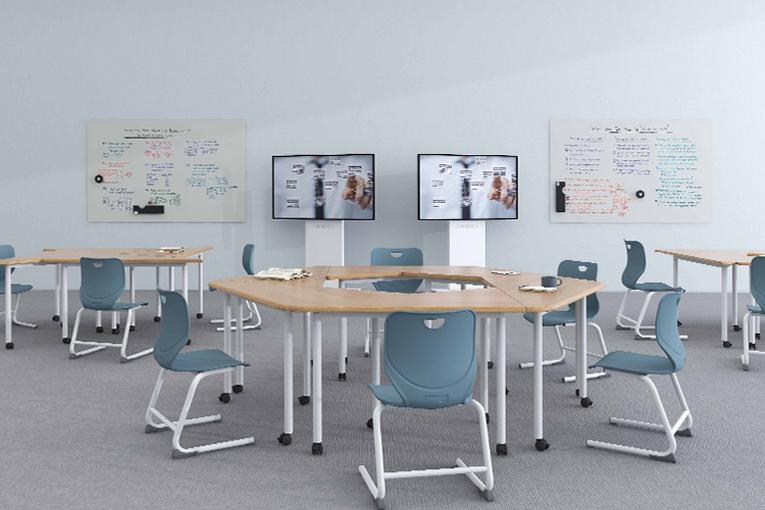
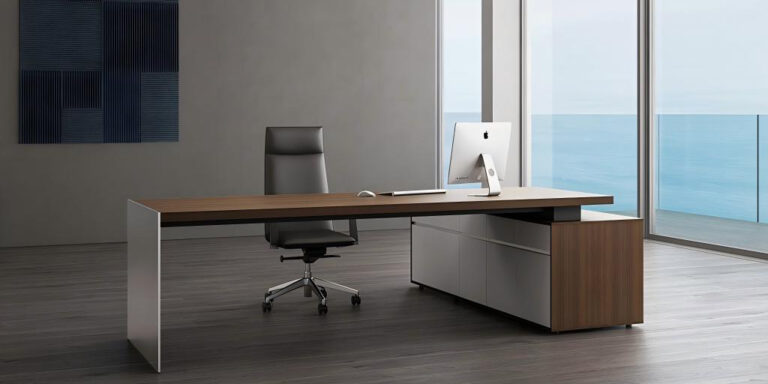
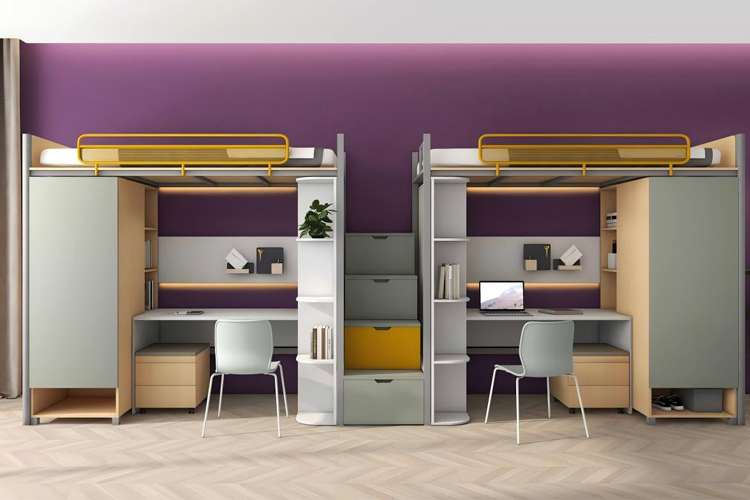
Onmuse supports this type of multi-category sourcing with a broader commercial furniture portfolio that extends beyond ergonomic office chairs. Its office furniture range includes executive chairs, conference chairs, executive desks, conference tables, and storage products such as 3 drawer file cabinets and wood file cabinets. For projects that extend beyond standard office zones, Onmuse also supplies school desks and chairs, auditorium chairs, bunk beds, commercial and restaurant lounge seating, and dining furniture, making it relevant for mixed-use, institutional, and education-oriented developments.
From a procurement perspective, this broader product coverage can reduce the number of vendors involved in a project while supporting a more coordinated purchasing process. It also gives project teams a practical option when they need to align meeting spaces, executive rooms, and support areas with the same sourcing partner used for task seating.
Start Planning Your Office Chair Procurement
If you are planning a project, it’s worth reviewing your specifications, supplier capabilities, and delivery plan early — before placing a bulk order.
Contact the Onmuse team to review your project requirements, or explore our ergonomic chair range to find suitable options for your application.
FAQ: Office Chair Procurement for Commercial Projects
1. What is the typical lead time for bulk office chair orders?
For standard models, lead time is usually 15–20 days.Custom configurations or large-volume orders may require additional production time depending on specifications.
2. What certifications should commercial office chairs have?
Most commercial projects require ANSI/BIFMA X5.1 certification as a baseline.
Some projects may also require environmental certifications such as GREENGUARD.
3. How do you ensure consistency in large chair orders?
Consistency is ensured through:
Pre-production sample approval
In-line quality inspection
Final batch inspection before shipment
These steps help maintain uniform quality across all units.
4. What should be included in an office chair RFQ?
A complete RFQ should include:
Technical specifications (dimensions, adjustability, load capacity)
Certification requirements
Material and finish standards
Required documentation and samples
5. How should office chairs be delivered for large projects?
Most large orders use knock-down (KD) packaging to reduce shipping cost.
Delivery is typically scheduled in phases to match the installation timeline.