How Businesses Choose Executive Desks for Leadership Offices
Executive desk procurement for a corporate fit-out involves more than selecting a finish from a catalogue. Procurement managers and facilities directors must align desk configurations to office space dimensions, match surface materials to usage intensity and executive-level finish expectations, specify functional requirements for cable management and storage, and coordinate delivery against a project handover date, all before a purchase order is signed.
This guide covers the specification criteria, material options, dimension standards, and procurement decision logic that corporate buyers need to evaluate executive desks for leadership offices at scale. For the broader procurement process framework, supplier qualification, documentation, and RFQ preparation, the principles covered in the school furniture procurement checklist apply equally to corporate furniture procurement and can be adapted as a process reference.
1. Defining the Specification Before Issuing an Executive Desk RFQ
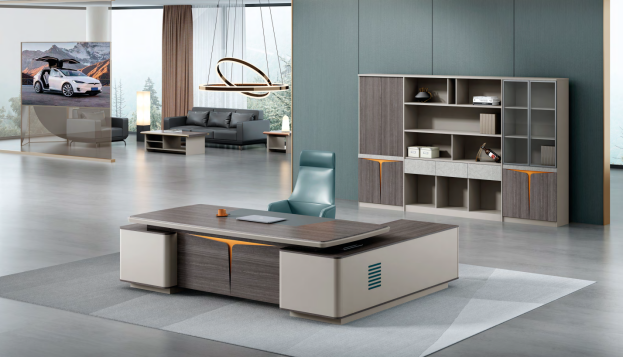
An executive desk RFQ that lacks precise specification criteria will produce non-comparable supplier responses. Surface material grade, desktop dimensions, configuration type, cable management requirements, and finish codes must all be defined before the RFQ is issued, not resolved during supplier negotiations.
Identify Configuration Requirements by Office Type
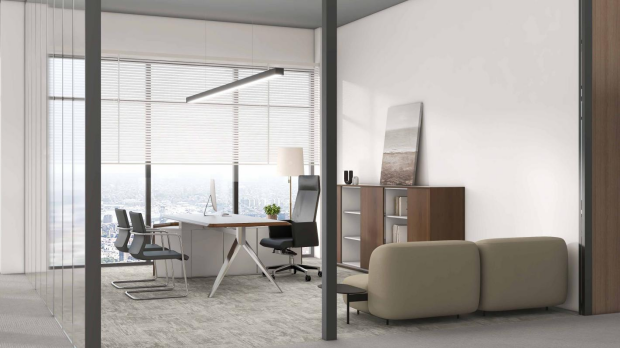
Executive desk configurations vary significantly by seniority level and office use pattern. A C-suite office with client-facing meeting function typically requires a large-format desk, 1,800×900mm or 2,000×1,000mm, with a return unit or credenza to support document storage and secondary work surface. A director-level office used primarily for individual focused work may be adequately served by a 1,600×800mm single-pedestal desk.
The configuration requirement for each office type should be documented in a room-by-room specification schedule before the RFQ is drafted.
Establish Finish Code Requirements Across Floors
Corporate fit-outs covering multiple floors or multiple executive suites require a documented finish code matrix, surface material reference codes, edge profile specifications, and frame or leg finish codes, agreed across all spaces before supplier quoting begins. Finish inconsistency between floors or suites creates a visible quality control problem that is expensive to rectify after delivery.
For multi-floor projects, the finish code matrix should be a mandatory attachment to the RFQ, with suppliers required to confirm matching production capability across the full order volume.
Confirm Structural Testing Requirements
Executive desks for corporate procurement should comply with BIFMA X5.5, the ANSI/BIFMA standard covering structural performance and durability testing for office desks and tables. Procurement teams should require BIFMA X5.5 test certificates, or an equivalent recognized standard, from an accredited third-party laboratory as part of the supplier qualification documentation package. Desks without third-party structural certification represent a quality and liability risk in high-use executive environments.
2. Executive Desk Surface Materials: Specification Criteria by Use Environment
Surface material selection for executive desks is one of the highest-impact procurement decisions in a corporate fit-out. Material choice determines durability, maintenance requirements, finish quality expectations, and total lifecycle cost, not just visual appearance.
High Pressure Laminate (HPL)
HPL surface panels are manufactured by bonding multiple layers of resin-impregnated paper under high heat and pressure to produce a dense, hard-wearing surface. For executive desk procurement, HPL panels should be specified at a minimum 0.8mm wear layer thickness and mounted on an E1-grade MDF or particleboard substrate at a minimum 25mm thickness for desktop applications.
HPL is the most durable surface option for high-use executive environments, offering resistance to scratching, impact, and moisture. It is the appropriate material specification for director and senior manager desks used in daily high-contact work environments.
Natural Veneer
Natural wood veneer surfaces apply a thin slice of real timber, typically 0.5mm to 1.0mm, to an engineered substrate, producing an authentic wood grain finish without solid wood construction costs. Veneer is the standard surface specification for C-suite and boardroom executive environments where premium finish quality and natural material warmth are required.
Procurement teams specifying veneer surfaces must include the veneer species, grain direction, and matching requirement across all units in the order. Veneer grain variation between desks in the same suite is a visible quality issue that must be managed at the production stage, not after delivery.
Lacquer and Paint Finish
Lacquer or paint-finished executive desks apply a pigmented coating directly to the substrate or to a primer layer, producing a solid-colour, flat or semi-gloss surface. This finish category is most appropriate for modern corporate interiors with a monochromatic or high-contrast design palette.
Lacquer finishes are more susceptible to edge chipping and surface scratching than HPL under daily use. Procurement teams should specify lacquer finishes for executive offices with lower daily contact intensity, or in environments where periodic refinishing is an accepted maintenance commitment.
Material Selection Summary by Executive Level
For C-suite and boardroom environments: natural veneer with matching grain specification. For senior director and head-of-department offices: HPL at 0.8mm wear layer minimum on 25mm substrate. For open-plan manager workstations within an executive floor: MFC (Melamine Faced Chipboard) at 18mm is acceptable for lower-contact use, but should not be specified for individual executive offices where finish quality expectations are high.
3. Executive Desk Dimensions and Configuration Standards
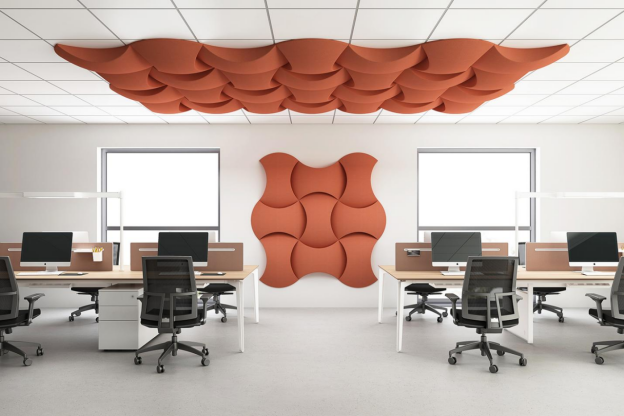
Desk dimensions must be matched to the office room dimensions, the intended use pattern, and the clearance requirements for visitor seating and storage furniture within the same space.
Standard Dimension Ranges by Configuration Type
Single straight desks for individual executive use are typically specified at 1,600×800mm (standard director level) or 1,800×900mm (senior director and C-suite). Large-format desks at 2,000×1,000mm are reserved for CEO-level or client-facing executive offices where the desk scale is an intentional presence signal as well as a functional surface.
L-shape configurations, combining a primary desk with a perpendicular return, are typically sized at 1,800×1,600mm overall, with the return unit at 800×600mm depth. These configurations provide the secondary work surface required for multi-monitor setups, document management, and dual-task executive work patterns.
Desktop Thickness and Structural Specification
Executive-grade desktops should be specified at a minimum 25mm panel thickness for single straight desk configurations. Thinner panels, 18mm or below, are adequate for standard office workstations but do not provide the visual mass or structural rigidity expected in executive-level furniture.
L-shape and large-format configurations should maintain consistent 25mm thickness across both the primary desk and the return unit to ensure visual and structural continuity across the full configuration.
Clearance Requirements Around Executive Desk Configurations
A straight executive desk requires a minimum 900mm clearance behind the executive’s chair to allow movement between the desk and any storage or credenza furniture positioned at the rear wall. The visitor-side clearance, between the desk front edge and any visitor seating, should maintain a minimum 1,200mm to allow comfortable approach and seating access. L-shape configurations require an additional 600mm clearance at the return unit end to avoid obstruction when the executive moves between desk and return surfaces.
These clearance requirements must be confirmed against the actual room dimensions before the desk configuration is finalized. A configuration that fits the room in plan view may not provide compliant clearances when visitor seating and storage units are included.
4. Functional Requirements: Cable Management, Storage, and Access
Functional specification is the most frequently under-specified element of executive desk procurement. Desks that arrive without confirmed cable management provisions require on-site modifications that delay installation and compromise the finished appearance of the office.
Cable Management Specification
Modern executive offices require integrated cable management for power, data, and device charging. Cable ports, typically 60–80mm diameter grommets, should be specified at a minimum of two positions per straight desk: one at the rear desktop edge for monitor and device cables and one at a mid-desktop position for direct-access charging and data connections. For L-shape configurations, a minimum of three cable port positions should be specified.
Cable tray or cable spine systems running within the desk frame should be confirmed as part of the specification. Surface cable ports without internal routing channels create visible cable management problems regardless of how well the ports are positioned.
Pedestal and Storage Configuration
Pedestal drawer units, either fixed to the desk frame or mobile, should be specified by drawer configuration (box/box/file or file/file) and lock type (individual drawer locks vs. central lock cylinder) as part of the RFQ. For executive offices, a fixed pedestal under the desk combined with a separate mobile pedestal provides the document storage capacity required for daily executive use without adding visual bulk to the desk configuration.
Storage requirements vary significantly by role. Confirm pedestal configurations with the facilities team or executive user group before finalizing the specification, as post-delivery storage additions rarely match the desk finish exactly.
Need a complete executive desk specification template for your RFQ? ONMUSE provides product data sheets, material compliance documentation, and finish code references as part of the standard supplier response package for corporate fit-out projects. Contact the team to request a specification package before finalizing your supplier shortlist.
5. Customization Options for Executive Desk Procurement
Standard catalogue configurations do not always align with the room dimensions, finish palette, or functional requirements of a corporate executive fit-out. Understanding what customization is practically achievable, and what it costs in lead time and minimum order terms, is a key supplier qualification criterion.
Dimension Customization
Most commercial executive desk manufacturers can accommodate dimension adjustments within defined tolerance ranges, typically ±100mm on length and ±50mm on depth from standard catalogue sizes, without significant lead time or cost penalties. Adjustments beyond these tolerances require custom production scheduling and typically add 10–15 days to standard lead time.
Procurement teams should confirm the supplier’s dimension customization range and the associated lead time impact at the RFQ stage, not after the purchase order is placed.
Finish and Material Customization
Custom surface finishes, non-catalogue veneer species, bespoke laminate colours, or custom lacquer RAL codes, require material procurement lead time ahead of production and should be confirmed with the supplier at least 6–8 weeks before the required delivery date.
For multi-floor corporate fit-outs where finish consistency across a large order volume is critical, manufacturers like ONMUSE that maintain documented finish codes and production batch records across corporate project orders provide the quality control infrastructure needed to deliver consistent results across phased delivery schedules.
Branding and Configuration Integration
Some corporate fit-outs require executive desks to incorporate branded elements, inlaid logo panels, custom hardware finishes, or specific edge profile treatments. These requirements must be confirmed with the manufacturer before the RFQ is issued, as they require design review, prototype approval, and extended production lead times. Procurement teams that introduce branding requirements after purchase order confirmation typically encounter 3–4 week delays and additional unit cost premiums.
6. Lead Times and Delivery Planning for Corporate Executive Desk Orders
Lead time management for executive desk procurement is directly linked to the project handover date. Corporate fit-out projects that miss furniture delivery windows face a cascading delay that affects office occupation, headcount activation, and project close-out.
Standard and Custom Lead Times
Standard catalogue executive desks typically carry production lead times of 30–45 days ex-factory. Custom configurations, non-standard dimensions, bespoke surface finishes, or integrated branding, extend this to 45–60 days. Add 15–25 days for international freight and 5–10 days for customs clearance and local delivery where applicable.
Procurement teams managing a corporate fit-out with a fixed office handover date should confirm purchase orders at least 60–75 days before the required on-site delivery date for standard products, and 75–90 days for custom orders.
Phased Delivery for Multi-Floor Fit-Outs
Multi-floor corporate fit-outs with staggered floor handover dates require a phased delivery schedule agreed in writing at contract stage. Each floor delivery window should be documented with a confirmed date range, a unit quantity breakdown, and a quality inspection protocol.
Suppliers must confirm their ability to hold completed inventory between delivery phases and provide a written commitment to finish code consistency across all phases. A C-suite floor delivered in Phase 1 and a director floor delivered in Phase 2 must match exactly in surface finish, edge profile, and hardware specification.
Start Your Executive Desk Procurement Project
ONMUSE supplies executive desks for corporate fit-outs, from individual director offices to multi-floor C-suite configurations, with HPL, veneer, and lacquer surface options, full BIFMA X5.5 structural documentation, and phased delivery scheduling for multi-floor projects.
Send your room-by-room configuration requirements, surface material preferences, finish codes, unit quantities, and target delivery date to the ONMUSE team. We will prepare a specification-ready quotation and complete documentation package for your corporate procurement review. Submit your executive desk RFQ here.
FAQs About Executive Desks
Q1. What Is the Difference Between an Executive Desk and a Regular Office Desk?
Executive desks are larger, built from higher-grade materials, and serve both individual work and visitor-facing functions. Standard desks run around 1,200×600mm; executive configurations start at 1,600×800mm and scale up to 2,000×1,000mm or L-shape formats.
Q2. What Size Executive Desk Do I Need for a Private Director Office?
For a 16–20m² director office, a 1,600×800mm or 1,800×900mm straight desk works best. For senior director offices of 20m² and above, an L-shape at 1,800×1,600mm adds a secondary work surface for multi-monitor or document-heavy use.
Q3. What Is the Best Material for an Executive Desk Surface?
HPL (0.8mm wear layer on a 25mm E1-grade substrate) is the most durable choice for daily high-contact use. Natural veneer suits C-suite and boardroom environments — always state veneer species, grain direction, and cross-unit matching in the RFQ.
Q4. How Deep Should an Executive Desk Be for Dual Monitor Use?
Specify a minimum 900mm depth so monitors sit at the correct viewing distance while leaving a 400–500mm work zone in front. The standard 800mm depth places monitors too close when a document zone is also needed.
Q5. Does ONMUSE Supply Executive Desks for Bulk Corporate Orders?
Yes — in HPL, veneer, and lacquer finishes for director, senior director, and C-suite fit-outs, with standard and custom dimensions. Explore the executive desks range or send your configuration breakdown for a quotation.
Q6. What Certifications Should I Ask For?
Require BIFMA X5.5 structural test certificates from an accredited third-party lab and EN 13986 E1 formaldehyde compliance for all wood-based panels. Material data sheets confirming surface grade and panel thickness should be included as standard.
Q7. Can Executive Desk Dimensions Be Customized?
Most manufacturers allow ±100mm on length and ±50mm on depth without lead time impact. Beyond that, custom production typically adds 10–15 days. Confirm the supplier’s tolerance range and lead time at RFQ stage, not after the PO.
Q8. How Do I Avoid Finish Mismatch Across Multiple Floors?
Produce a finish code matrix before the RFQ, and require suppliers to confirm batch consistency across all delivery phases in writing — a Phase 1 floor and a Phase 2 floor must come from the same material batch to match.