How to Choose Executive Office Furniture for Leadership Workspaces
Executive offices are different from standard workstation areas: they’re more visible, more meeting-heavy, and less forgiving when furniture feels mismatched or performs poorly. For procurement teams, the goal is to specify furniture that projects the right leadership image while still functioning as a high-use, technology-dependent workspace—then deliver it consistently across an entire project (or multiple sites) with minimal post-install issues.
Why Leadership Workspaces Need a Different Furniture Approach
Leadership spaces carry brand and operational expectations that don’t apply to general office areas. These rooms host sensitive conversations, frequent visitors, and long workdays—so the furniture has to support performance while reinforcing professionalism.
The Role of Furniture in Professional Image
In many organizations, the executive floor is effectively a “client-facing” environment—even when clients rarely enter. Board members, donors, candidates, auditors, legal teams, senior staff, and external partners may cycle through leadership offices, and the furniture becomes part of how the organization signals stability and credibility.
From a procurement perspective, “image” is not about premium finishes for their own sake. It’s about avoiding visible shortcuts: inconsistent color tone, misaligned panel gaps, hardware that looks residential, or surfaces that wear quickly. These issues tend to be noticed immediately in leadership spaces because the visual field is calmer and the furniture is closer to eye level during meetings.
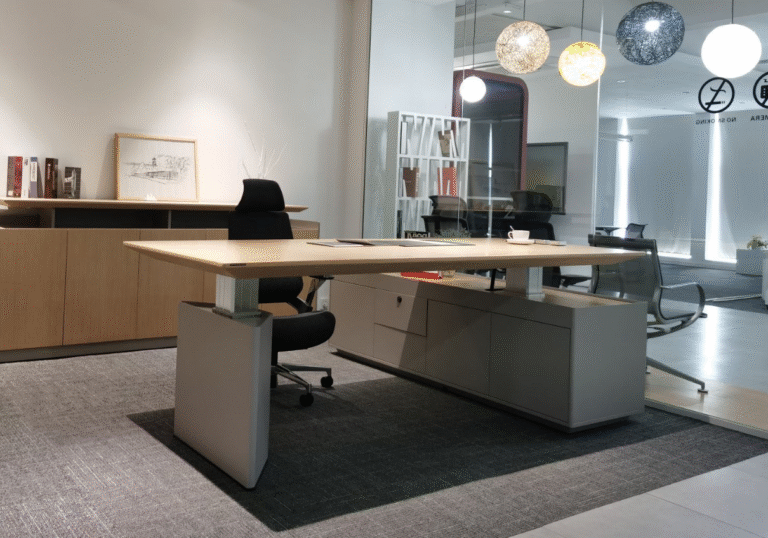
If you’re standardizing the office around a consistent “suite,” it helps to start with the core item and work outward—for example, aligning desk choices first (see: executive desks).
Balancing Privacy, Comfort, and Daily Function
Executive offices have to do multiple jobs at once: focused solo work, confidential calls, quick internal meetings, and sometimes small presentations. That multi-use reality changes what “good furniture” means.
A desk that looks impressive but has no realistic cable routing will quickly become cluttered. A credenza that photographs well but can’t store devices, files, or meeting materials creates daily friction. Guest seating that looks sleek but feels uncomfortable turns routine meetings into a distraction. Leadership spaces work best when furniture supports privacy, device use, and hospitality without adding maintenance headaches.
Key Features to Look for in Executive Office Furniture
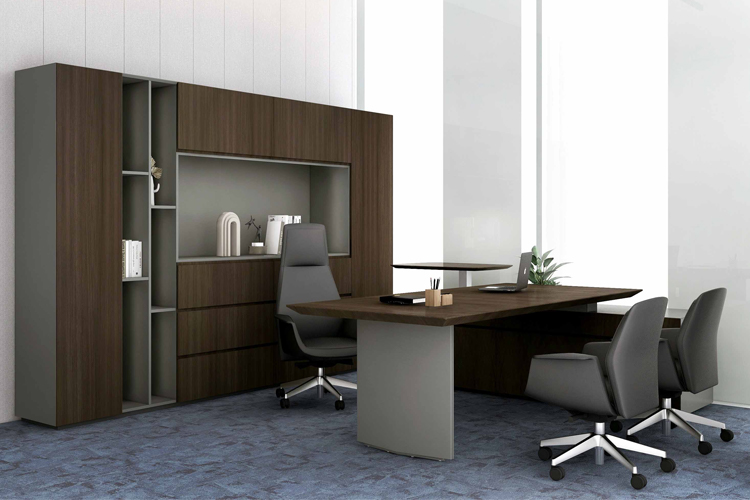
Executive furniture should be specified like a project system, not selected as isolated pieces. The strongest results come from aligning design language, comfort, finish quality, and daily-use features—then confirming those choices can be produced consistently at project scale.
Professional and Consistent Design Language
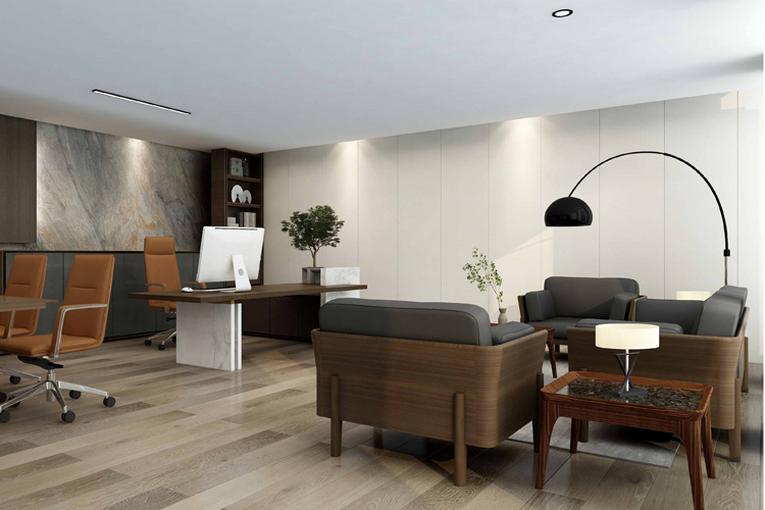
Consistency is the fastest way to make an executive suite look intentional. Procurement teams can protect this by treating the office as a coordinated set: desk, return (if used), credenza, storage, guest seating, and any small meeting element.
A consistent design language usually shows up in details: matching edge profiles, a controlled palette of finishes, coordinated hardware, and proportional alignment between pieces. If multiple furniture lines or vendors are involved, the risk increases—especially with wood tones and sheen levels—so it helps to standardize finish samples and approve them early.
Comfort and Support for Long Working Hours
In leadership environments, comfort is less about softness and more about sustained support and fit. Chairs should accommodate long sessions without creating pressure points or forcing awkward postures, and the desk height and leg clearance should work with real device setups (monitor, docking station, keyboard, laptop stand, etc.).
It’s also worth thinking about guest experience. Executives may host several short meetings per day; uncomfortable guest chairs create negative “micro-friction” that people remember. The best executive offices balance ergonomics with a professional aesthetic so the seating looks appropriate in a leadership setting while still being usable.
Where teams often get better outcomes is by specifying seating based on use scenarios rather than titles—for example, selecting a refined executive look for formal offices (see: high-back leather executive chairs) while also keeping an ergonomic option that performs well for long work sessions (see: high-back mesh ergonomic chairs).
Material Quality and Refined Finishing Details
Executive furniture gets touched constantly: drawers, doors, pulls, worksurfaces, and edges see heavy use. The most common long-term failures are visual—chipped edges, worn finishes, stains that won’t clean out, or hardware that starts to feel loose or rough.
For procurement, the practical question is: will this still look credible after repeated cleaning and daily contact? Refined finishing isn’t only about appearance; it’s about how the surface resists wear, how edges are protected, and whether the finish and hardware feel stable year after year. This is also where manufacturer quality control makes a visible difference, particularly for matching finish tone across multiple pieces in the same room.
Practical Features for Daily Executive Use
Executive offices accumulate technology quickly. Without deliberate planning, cables become visible, surfaces become crowded, and the room loses the calm, composed feel leadership spaces need.
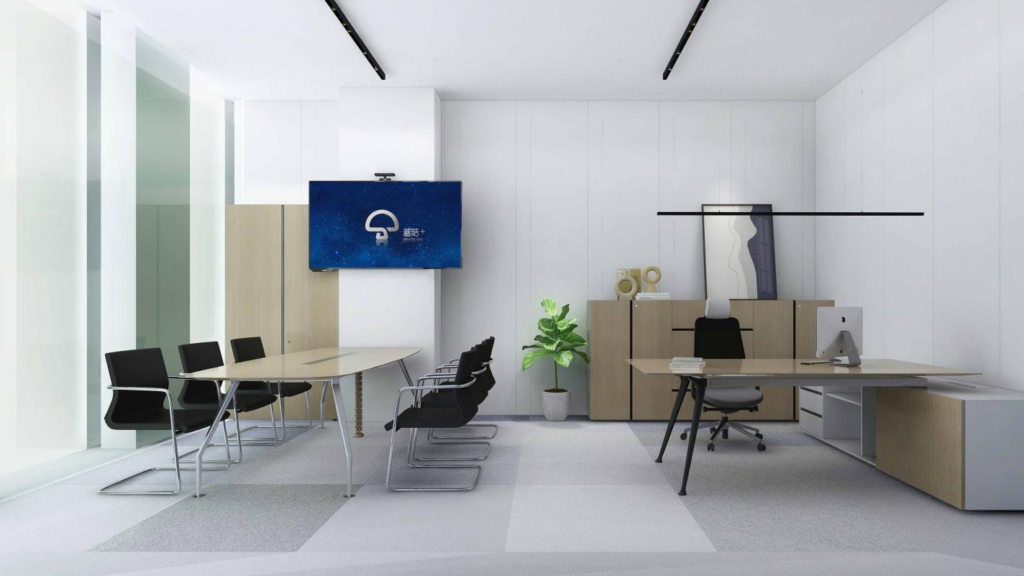
Well-specified executive furniture typically includes realistic solutions for cable routing, device placement, and secure storage. That may mean discreet access points for power/data, credenzas that can manage equipment without overheating or clutter, and storage that matches how the executive works (paper-light vs. paper-heavy, lockable needs, meeting materials, personal items). The key is to plan for real behaviors, not idealized “clean desk” scenarios.
Common Buying Mistakes in Leadership Workspace Projects
Many executive office disappointments come from selecting furniture based on appearance alone or treating the space like a one-off design moment instead of a repeatable project standard. Avoiding a few common mistakes can significantly reduce post-install complaints and replacement pressure.
Focusing on Appearance Over Real Usability
Renderings and showroom impressions can hide functional problems. Desk depth may be too shallow for a monitor and writing space. Returns may block movement or conflict with where the chair naturally sits. Storage may look adequate until you account for devices, bags, and meeting materials.
Procurement teams reduce this risk by validating the planned setup with real user needs before final approval: typical device stack, number of in-office meetings, whether the executive prefers a return or a separate meeting element, and whether confidential storage is required. A small mockup (even a single office) can prevent costly rework across multiple rooms.
Ignoring Consistency Across the Full Furniture Set
An executive office rarely looks “wrong” because one item is bad. It looks wrong because pieces don’t belong together: mismatched wood tone, competing hardware styles, different sheen levels, or proportions that fight each other.
This mistake gets amplified in larger projects, especially if executive suites are repeated across departments, floors, or regional sites. Even modest inconsistencies become more noticeable when viewers move from office to office. Standardizing a coherent set—then controlling finish approvals—helps maintain a consistent leadership brand across the organization.
Overlooking Storage, Cable Management, and Workspace Needs
This is often the biggest gap between “installed” and “successful.” Without enough storage and cable planning, the office becomes visually noisy within weeks. That undermines both image and function.
Good executive furniture plans acknowledge that leadership offices need staging areas for devices, meeting materials, and personal items. They also consider the support workflow—assistants, IT staff, or facilities may interact with the space, and the furniture should allow quick resets and simple access without moving heavy pieces or disassembling panels.
How to Evaluate Whether the Furniture Fits the Project
Selecting executive furniture is easier when the evaluation criteria match project reality: brand positioning, long-term maintenance expectations, and the supplier’s ability to deliver consistent quality across a project order.
Matching the Furniture to the Project Positioning
Every organization has an implicit “positioning” in its leadership spaces—traditional and formal, modern and performance-driven, or somewhere in between. The furniture should align with that identity without feeling disconnected from the broader workplace.
For procurement, positioning becomes actionable when it’s translated into clear decisions: finish palette, hardware tone, overall scale, and how “suite-like” the office should feel. A corporate HQ executive floor may require a more formal, coordinated look than a regional office, but both should feel like the same organization. The best specifications define what must stay consistent and what can flex by location.
Assessing Long-Term Use and Maintenance Value
Long-term value depends on how the furniture holds up under cleaning, daily handling, and occasional repairs. Executive furniture should be serviceable: hardware should be replaceable, surfaces should be maintainable, and warranties should match the reality of commercial use.
If you anticipate leadership turnover, expansions, or phased renovations, consider whether matching product is likely to remain available and whether the supplier can support repeat orders without finish drift. Predictability matters more than novelty in leadership environments because the cost of replacing mismatched executive pieces is disproportionately high.
Checking Quality Consistency for Project Orders
In leadership spaces, small inconsistencies read as quality issues—even if performance is fine. That makes quality consistency a procurement priority, particularly for larger projects or phased deliveries.
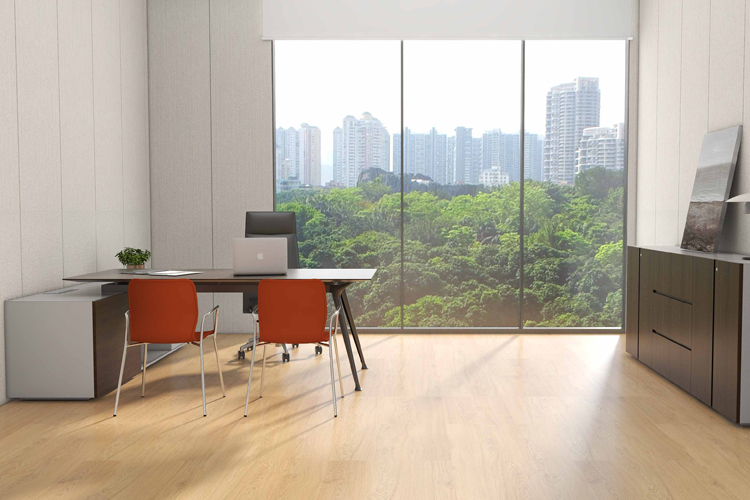
A practical evaluation process usually includes approving finish samples tied to the actual production run, confirming how the manufacturer controls variation (materials, finishing, and assembly), and verifying what happens if something arrives damaged or mismatched. Even for overseas buyers, this is where project documentation, clear submittals, and reliable packaging standards reduce risk and shorten punch lists.
Choosing Executive Furniture That Balances Image and Function
The best executive offices feel composed and work effortlessly. That outcome is rarely achieved by chasing the “most impressive” look; it’s achieved by specifying furniture that supports the real daily rhythm of leadership work and holds up over time.
Creating a Stronger Leadership Environment
Executive furniture should make the room feel stable, intentional, and ready for serious conversations. When the suite is visually consistent, finishes are controlled, and the space stays organized (because storage and cable planning are built in), leadership teams experience fewer distractions and fewer “workarounds” that compromise the room.
For procurement, that means fewer complaints, fewer replacements, and fewer surprises after occupancy—especially when executive offices are repeated across a floor or across multiple sites.
Supporting Better Decision-Making Through Better Space Design
Leadership offices are where decisions get made, conflicts get resolved, and priorities get set. Furniture won’t replace good management, but it can remove friction: comfortable seating for long sessions, surfaces that support device-heavy work, storage that keeps sensitive materials secure, and layouts that handle quick meetings without awkward positioning.
When image and function are specified together, executive furniture becomes easier to defend internally: it supports brand perception while meeting operational needs—and it delivers a predictable, maintainable standard procurement can manage over time.
If you’re looking to standardize leadership offices across projects, Onmuse is typically evaluated on this same basis: consistency, documentation readiness, and the ability to deliver coordinated executive suites at project scale.
FAQs
What should be included in an executive office furniture specification for bidding?
At minimum, include the furniture scope (desk/return/credenza/storage/guest seating), exact finish selections (supported by approved samples), key dimensions, hardware expectations, cable-management requirements, and warranty/service terms. For project orders, it’s also important to define submittal requirements and finish-match expectations across phased deliveries.
How can procurement reduce the risk of finish mismatch across an executive suite?
Approve physical finish samples tied to the production run, not only catalog names or photos. If the order is phased, confirm how the manufacturer controls finish consistency over time and what the process is for resolving mismatches. A first-article or mockup approval for one representative office can catch issues early.
Is it better to buy an “executive suite” collection or mix pieces from different lines?
A coordinated suite typically reduces mismatch risk and simplifies future replacements. Mixing can work when there’s a strong design standard (finish palette, sheen, hardware tone, proportions) and someone is actively managing those details across vendors. If the project needs repeatability across sites, a suite approach is usually easier to maintain.