How to Choose School Desk and Chair Solutions for Modern Educational Environments
Modern classrooms are expected to do more with less: support different teaching modes, accommodate a wider range of student needs, and stay functional under constant movement and cleaning. For procurement and facilities teams, School Desk and Chair selection is one of the highest-impact decisions because it affects daily usability, maintenance workload, and consistency across large rollouts.
Why Modern Learning Spaces Need Better Desk and Chair Solutions
Today’s learning spaces are designed for change: different teaching formats, rotating room schedules, and frequent resets. Desk and chair selections need to support that reality without creating maintenance burden or shortening service life.
Supporting Different Age Groups and Classroom Needs
The biggest performance gap in school seating and desks usually comes from mismatch—furniture that’s the wrong size range, not stable for the student group, or not aligned with how the room is actually used.
Procurement teams typically get better outcomes by defining desk-and-chair standards around repeatable use cases—grade bands, room types, and layout-change frequency—rather than attempting a one-size-fits-all approach. This supports standardization while still accounting for differences between elementary, middle school, high school, and specialized programs.
Balancing Daily Durability and Student Comfort
In high-use classrooms, durability and comfort can’t be treated as separate goals. If a chair is uncomfortable, it gets dragged, tilted, and misused. If a desk surface fails under daily wear, students and staff adopt workarounds that shorten service life even further.
A more reliable approach is specifying for real conditions: frequent movement, occasional impacts, and routine cleaning. When comfort is addressed through stable ergonomics (not softness), furniture tends to last longer and generate fewer complaints.
Key Features to Look for in School Desks and Chairs
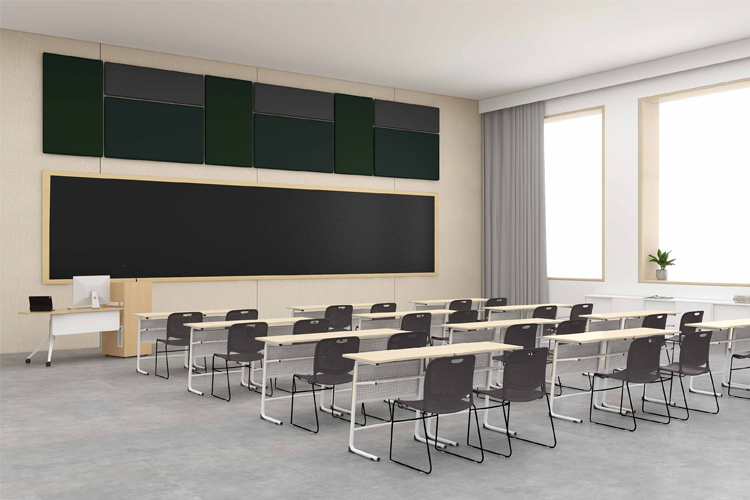
The strongest desk-and-chair selections balance fit, durability, flexibility, and day-to-day practicality. The goal is not just a good sample—it’s a solution that stays consistent and serviceable when scaled across buildings, grade levels, and phased timelines.
Ergonomic Fit for Multi-Age Learning Environments
Ergonomic fit in schools is primarily about correct sizing and stable posture support. Chairs should support functional seated posture without forcing awkward reach or slouch patterns, and desks should provide usable surface area without creating crowding or poor circulation.
Where districts serve multiple age groups, procurement often reduces risk by standardizing a small number of approved size ranges rather than expanding SKUs too far. This keeps ordering and replacements simpler while still aligning furniture dimensions to student populations.
Material Strength for High-Traffic School Use
Desks and chairs are touched constantly and cleaned often. The most common long-term issues are predictable: edge wear, surface scratching or staining, wobble from loosened joints, and early failure of glides or fasteners.
Instead of evaluating durability as a general claim, it helps to evaluate likely failure points. How do edges hold up when chairs are bumped? Does hardware stay tight after daily movement? Do surfaces degrade under the cleaning products used on campus? Standardizing a coordinated school desk and chair solution can also make it easier to keep wear performance and finish expectations consistent across the room.
Flexible Configurations for Collaborative Classrooms
Flexibility has become a baseline requirement in many districts and institutions. Desks and chairs should support quick transitions—lecture to group work, testing to discussion—without requiring excessive staff effort or creating storage problems.
Flexibility should be evaluated in operational terms: how easily furniture moves, whether it stacks or nests without damage, and whether the shapes actually combine into the layouts teachers use. Furniture that “can” reconfigure but is too heavy, too loud, or too fragile in practice tends to become static.
Practical Design for Daily Classroom Function
Small design details often determine whether classroom furniture stays usable over time. That includes how it cleans, how it responds to student behavior, and whether it supports the technology reality of the classroom.
Consider what happens between periods: students stand up quickly, backpacks shift, desks slide, and custodial teams clean on tight schedules. Practical designs reduce snag points, make surfaces easier to wipe, and avoid features that loosen under constant movement.
Common Buying Mistakes in School Desk and Chair Procurement
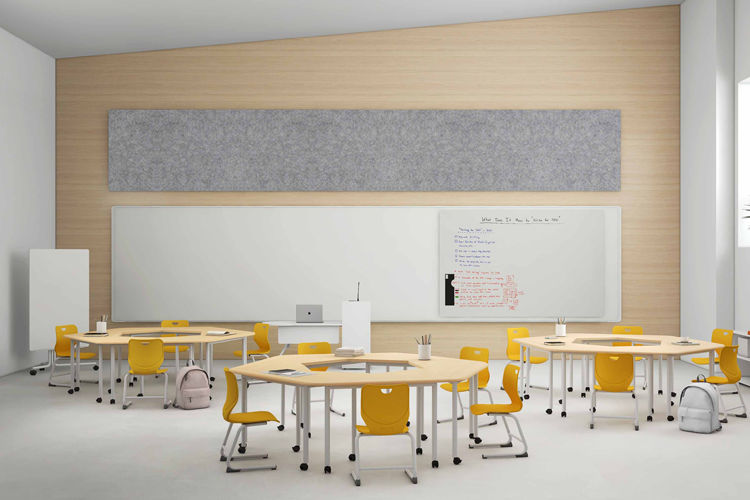
Many problems don’t show up during selection—they show up during the first semester of real use. The most avoidable issues come from optimizing for unit price or appearance while underweighting serviceability, flexibility, and bulk-order consistency.
Focusing on Price Over Long-Term Performance
A low unit price can be costly when it leads to early replacements, increased maintenance tickets, or inconsistent classroom conditions. In large rollouts, even a small reduction in service life can create a budget spike later—especially when replacement purchases happen off-cycle.
Procurement teams often get better outcomes by comparing cost per year of service (expected usable life plus maintenance impact) rather than comparing unit price alone.
Ignoring Flexibility in Modern Learning Layouts
If a room will be reconfigured frequently, furniture must support movement without loosening, wobbling, or damaging floors and surfaces. A common mistake is selecting a desk that is durable in a static setting but becomes a maintenance issue when moved daily.
Flexibility also needs a storage plan. A “flexible” classroom with no place to stage unused furniture becomes cluttered and less safe, which accelerates wear.
Overlooking Consistency Across Bulk Orders
Consistency is a procurement risk category in itself. Variation in finish tone, size, or component quality across shipments creates immediate complaints and complicates replacements later.
For larger projects, it’s worth confirming how the supplier manages bulk production consistency, packaging protection, and phased deliveries—especially if multiple schools or buildings are being furnished on staggered timelines.
How to Evaluate Whether the Solution Fits the Project
Once options are shortlisted, project-fit evaluation helps prevent installation-day surprises and long-term operational issues. The goal is to confirm the furniture aligns with the learning model, durability expectations, safety requirements, and rollout scale.
Matching Furniture to Learning Space Requirements
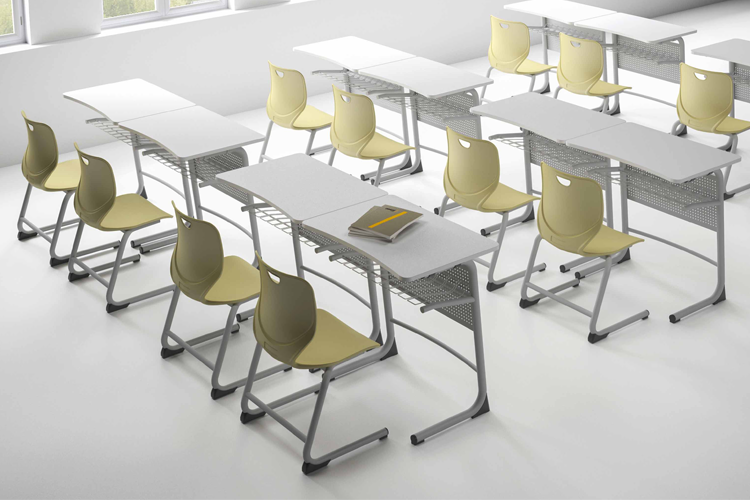
Start by evaluating the room as a system: teaching style, movement patterns, storage constraints, and the level of supervision. A furniture set that works well in a self-contained elementary classroom may not perform the same way in a rotating high school schedule with frequent transitions.
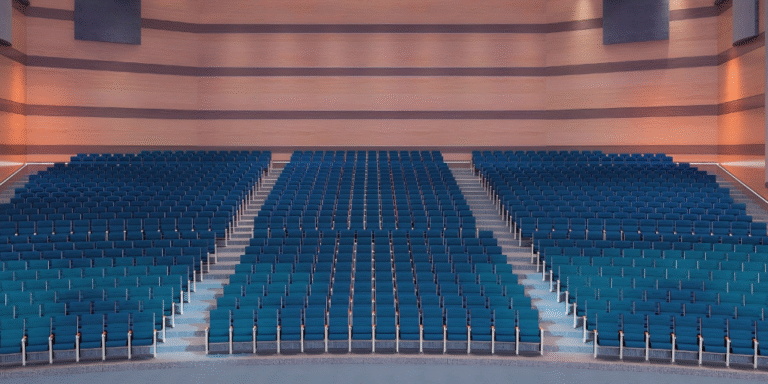
It also helps to separate classroom standards from other campus seating needs. Lecture halls and performance venues typically require a different specification track, where categories like auditorium chairs are evaluated against different comfort, durability, and maintenance expectations than classroom seating.
Reviewing Durability and Safety Expectations
Durability and safety should be verified against actual campus operations: cleaning routines, the reality of student movement, and the institution’s internal approval requirements.
Procurement teams reduce risk by confirming documentation readiness (cut sheets, care guidance, warranty clarity) and validating common failure points during a pilot. Even a limited pilot can identify whether furniture loosens, scuffs, or becomes difficult to maintain under real classroom use.
Assessing Scalability for Large-Scale School Rollouts
A product that performs well in a single classroom still needs to perform at scale. Scalability includes production consistency, availability for repeat orders, and the supplier’s ability to support phased installations aligned with school calendars.
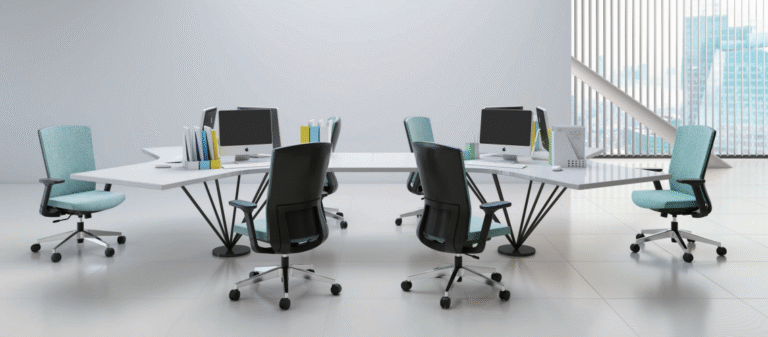
If the rollout spans multiple sites or years, it’s worth confirming that chosen models and finishes are likely to remain available and that replacement parts and service processes are clearly defined. For institutions balancing classroom rollouts with administrative areas, the evaluation logic used for leadership spaces—like the criteria in executive office furniture for leadership workspaces—can be a helpful internal reference point for how standards shift by user group and visibility.
Choosing Desk and Chair Solutions That Support Better Learning
The best desk-and-chair decisions support teaching, reduce maintenance load, and keep classrooms consistent across a campus or district. Procurement outcomes improve when selections are tied to real use conditions and validated for rollout readiness.
Creating More Adaptable and Efficient Classrooms
When furniture supports quick layout changes and holds up under daily handling, classrooms spend more time being used and less time being managed. Teachers can shift activities without losing time, and staff can reset rooms faster between periods or programs.
That adaptability also protects the facility: fewer damaged floors, fewer broken components, and fewer replacement purchases driven by avoidable wear.
Improving Long-Term Value Through Better Furniture Selection
Long-term value typically comes from three choices: right-sizing to the student population, selecting materials and construction that survive daily use, and standardizing where it improves maintenance and reordering.
District-wide planning is easier when classroom decisions connect to broader institutional standards, including the durability and lifecycle considerations covered in institutional school furniture. If you’re building a district standard or planning a multi-school rollout, Onmuse can support specification discussions around consistency and project readiness.
FAQs
Q1. How do we choose the right desk and chair sizes for different grade levels?
Most institutions standardize by grade band and validate with a small pilot to confirm real fit. The goal is functional sizing for the majority of students, with clear rules for exceptions (special education rooms, testing rooms, specialty programs).
Q2. What should procurement verify before approving a bulk order?
Confirm durability under your cleaning routine and expected movement frequency, documentation readiness (cut sheets and warranty), packaging quality, and whether the supplier can maintain consistency across phased shipments and future reorders.
Q3. Should we standardize one desk-and-chair model across the entire district?
Standardization can simplify maintenance and replacements, but it works best when aligned to real use cases. Many districts standardize a small set of approved options based on grade bands and room types rather than forcing one model to cover every setting.
1-768x431.png)