B2B Procurement Guide: Mesh vs Leather Office Chairs for Long-Term Office Use
On a commercial project, chair material is not a style choice. It is a risk choice that affects closeout, service calls, and user complaints for years. The decision between mesh vs leather office chairs should be tied to building conditions, cleaning methods, and how the seats will be used across shifts and shared stations. Mesh can reduce heat complaints but may lose tension or snag if the frame and attachment method are weak. Leather can signal a premium finish, yet it can trap heat and fail fast when the wrong grade or cleaner is used.
A clear spec, verified test reports, and a parts plan keep finishes consistent and prevent mid-project substitutions that create rework after occupancy and repeated cleaning.
What are the key procurement pros and cons of mesh vs leather office chairs?
Both materials can work long-term, but they create different risks. The goal is to choose the risk profile that best matches your building conditions and user population, then lock the spec so substitutions don’t weaken performance.
Mesh material
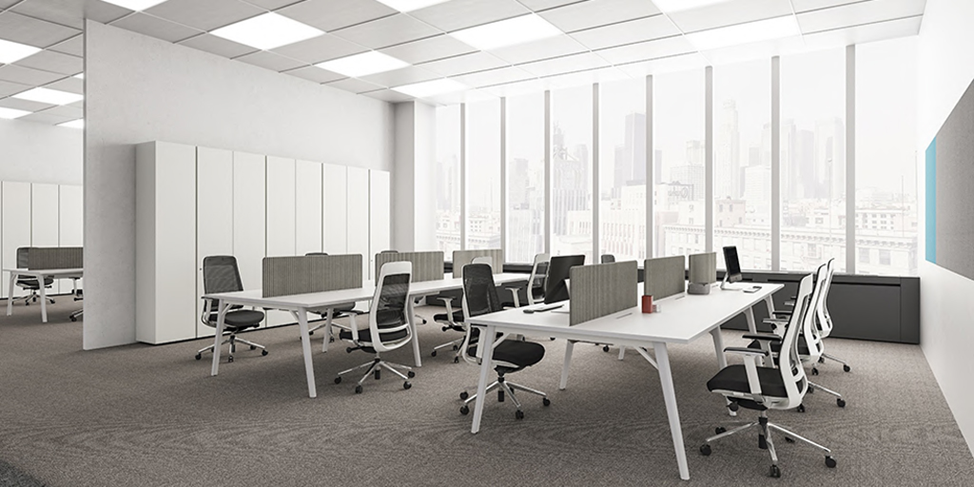
Mesh is commonly selected to reduce heat-related complaints and increase acceptance across large user groups. In open-plan seating and shared workstations, mesh backs often result in fewer “my back gets hot” tickets, especially where HVAC performance varies by zone.
Mesh can also reduce “visual inconsistency” issues on large rollouts. Dark mesh hides minor dust and daily wear better than many light leather tones, which helps the office look uniform without raising cleaning labor.
From a risk-control standpoint, mesh is safest when you treat it as a tensioned component (frame + mesh + attachment method), not “just fabric.” In submittals, focus on how the mesh is supported, how it’s fastened, and whether it can be replaced without replacing the whole chair.
Mesh material
- Loss of tension over time can create a “hammock” feel, which turns into support complaints even if the chair is technically not broken.
- Mesh can snag and fray from belts, zippers, badges, and tool clips—especially in IT, facilities, and security-heavy environments.
- Mesh may be harder to clean than teams expect because dust can sit inside the weave; if facilities is set up for wipe-down only, this can increase “dirty chair” complaints.
- Edge attachment failures are a real risk; many problems occur at mounting points, not in the center of the mesh panel.
Leather material
Leather is often specified to protect perception risk in high-visibility rooms—executive offices, boardrooms, and client-facing areas—where furniture is part of brand presentation. When the right leather construction is used, it can also support faster day-to-day wipe cleaning than many woven textiles.
Leather also reduces snagging exposure compared to mesh. If your users carry tools, wear gear, or move between chairs frequently, snag resistance can translate into fewer early visual defects.
Leather can be a strong choice when your priority is a “finished” look at handover and you have stable building conditions (especially predictable HVAC and defined cleaning protocols).

Leather material
The biggest risk is unclear definitions that allow substitutions. “Leather” can be presented in many ways in the market, and if the spec does not explicitly define what is acceptable, you can end up with inconsistent wear or surface failure that looks like neglect.
The second risk is heat retention. Leather can hold warmth and create “sticky” complaints in warm zones, dense seating areas, or buildings with uneven HVAC.
The third risk is maintenance conflict. If cleaning chemistry is not aligned to the upholstery finish, you can see discoloration and cracking—and then spend months in warranty disputes about whether the damage was “misuse.”
How does breathability affect long-term usability in different climates?
Breathability is a complaint predictor, not a comfort talking point. If your building has warm zones, dense seating, or inconsistent HVAC, breathability should drive material selection because it directly affects ticket volume and exception requests.
Thermal performance metrics and climate scenarios
In real offices, breathability shows up as whether users feel heat build-up during long sessions. Mesh backs typically reduce that sensation because air passes through the material. Leather tends to insulate more, which can feel warmer in summer and cooler at initial contact in winter.
Climate and space conditions should guide your default. Warm/humid regions and high-density seating usually favor mesh backs or hybrid designs. Cooler climates with stable HVAC can tolerate leather better, particularly in meeting rooms where people sit for shorter durations.
A practical procurement rule is to evaluate chairs in the worst-performing zones (hot perimeter, direct sun areas, or high-occupancy teams). If the chair performs there, it usually performs elsewhere.
Mitigating heat retention in leather chair specifications
If leather is required for aesthetic reasons, mitigate heat complaints through construction choices rather than hoping users adapt. Hybrid configurations (for example, mesh back with leather seat) are common because they reduce back heat complaints while keeping a premium seat surface where it’s most visible and most cleaned.
Also treat the seat as a system. Some “heat complaints” are actually seat foam issues (bottoming out, pressure concentration), which feel warmer and more fatiguing over time. For long-term outcomes, require construction details and verify with samples—not just catalog claims.
Which material offers superior durability and longevity for high-traffic use?
Durability is not a single number. It’s how the chair performs after thousands of sits, adjustments, and cleanings. The safest approach is to define durability through performance testing evidence and predictable, serviceable failure modes.
Defining and testing for material durability standards
Use recognized chair performance standards as your baseline, and require test reports for the exact model/configuration being supplied. Do not accept “meets standards” statements without documentation that can be filed and audited later.
Then evaluate upholstery durability separately. Mesh durability depends heavily on tension retention and attachment design. Leather durability depends on leather type, finish quality, seam construction, and cleaning compatibility. A chair can be structurally compliant and still become a problem asset if the surface ages badly or fails visually.
Common failure modes and replacement part planning
Mesh chairs often create issues when the back loses tension or when attachment points weaken. Leather chairs more commonly create visible wear at high-contact zones such as seat edges and arm areas, especially if cleaning products are harsh or the finish is thin.
Regardless of material, the most common service items are casters, gas lifts, arm pads, and control mechanisms. To reduce replacements, procurement should require parts availability for the planned lifecycle (often 7–10 years) and confirm that parts can be ordered without “project-only” restrictions.
What are the critical ergonomic and support specifications beyond material?
Material choice won’t rescue a chair that doesn’t fit your users or your desks. To reduce complaints, specify adjustability and fit range clearly, and verify it in real workstation conditions before ordering.
Non-negotiable adjustability requirements (BIFMA / ANSI)
Treat adjustability as pass/fail. Require seat height adjustment that matches your workstation standards, plus recline/tilt controls that support movement instead of forcing a rigid posture.
For shared seating or mixed user groups, seat depth adjustment and meaningful lumbar adjustment reduce complaint volume because more users can reach a workable fit without special requests. Arm adjustability is also a workstation compatibility item: many “ergonomic complaints” are actually arm interference with desks, leading to chair modification, damage, or exception purchases.
How material choice interacts with lumbar and pelvic support
Mesh can either support well or fail quietly. If the mesh behaves like a hammock, lumbar features may stop working as intended because the user’s pelvis rotates and the back support sits in the wrong place. That becomes a “no support” complaint even when lumbar adjustability exists.
Leather can create a different issue: some finishes combined with certain clothing can feel slick, which encourages users to slide forward. Sliding forward reduces pelvic stability and increases lower-back complaints. In sample evaluations, observe posture after 30–60 minutes, not only initial sit.
What are the realistic maintenance, cleaning, and repair protocols?
Maintenance is where good chairs fail on projects. If cleaning is difficult, or cleaning products don’t match the upholstery, you get visible wear, hygiene complaints, and warranty disputes. Procurement should require maintenance protocols that facilities can execute consistently.
Developing a lifecycle maintenance schedule for facilities
- Define cleaning frequency by zone, not by chair type (shared seating needs a different cadence than private offices).
- Align the method to the material: mesh often needs dust removal from the weave; leather needs approved wipe cleaning that won’t strip finishes.
- Standardize a small set of approved cleaners and tools to prevent ad-hoc chemical use.
- Document “do not use” chemicals so staff doesn’t accidentally void warranty coverage.
- Track and service common wear items (casters, arm pads, cylinders, mechanisms) with a simple inspection and replacement plan.
Supplier documentation and verification
Require written care instructions, approved cleaning products, warranty terms, and spare parts ordering details before finalizing the specification. This is how you prevent the “we cleaned it normally” vs “that chemical voids warranty” conflict.
Also, evaluate manufacturing consistency if this chair becomes a long-term standard across phases. Review the supplier’s approach to production and quality control to reduce batch-to-batch variability risk and avoid “same model, different durability” outcomes.
How does material choice impact professional aesthetics and space planning?
Aesthetics becomes a procurement risk when chairs age unevenly or look inconsistent across zones. Space planning becomes a risk when chairs don’t clear desks, don’t move correctly on flooring, or create circulation problems. The goal is a coherent look that stays coherent over time.
Coordination with overall furnishings and finish schedule
Coordinate chair material with workstation standards and flooring early. Many “chair complaints” are really fit issues: arms hitting worksurfaces, chairs not tucking in, or casters performing poorly on the selected floor.
This coordination matters even more when you deploy height-adjustable desks, because users change posture more often and interact more with armrests and controls—raising wear on touch points and increasing the importance of parts planning.
Aesthetic longevity and style flexibility
Leather can look premium long-term when it’s correctly specified and maintained, but it often shows wear in high-contact zones in ways users notice quickly. Mesh tends to look consistent longer in staff areas, but the wrong design language can feel out of place in formal rooms.
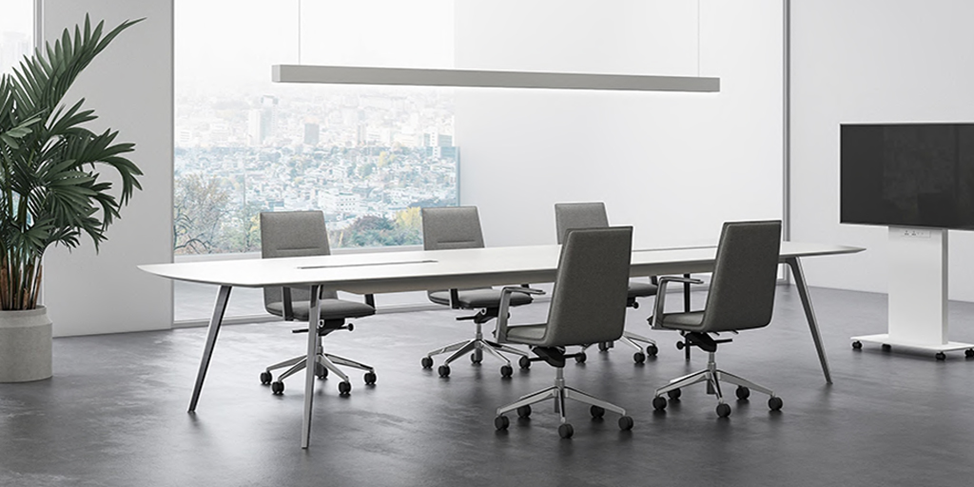
A practical strategy is to reserve leather for spaces where appearance is the primary requirement, and use mesh or hybrid seating where complaint reduction and climate tolerance matter most—while keeping the chair silhouette consistent so the office still looks intentional.
How should procurement evaluate total cost, not just initial price?
Initial price is easy to compare and rarely predictive of outcomes. Total cost is driven by complaint volume, cleaning time, repairability, parts continuity, and how quickly the chair looks worn.
Building a 7–10 year total cost of ownership model
A useful model includes purchase, freight, installation, expected repairs, spare parts, facilities labor, and replacement rate by zone. The hidden cost is complaint handling: internal tickets, ad-hoc swaps, and exception buys that break standardization.
Mesh may reduce heat complaints but can increase tension-related support complaints if quality is weak or cleaning is mismatched. Leather may improve perceived prestige in key rooms but can create climate complaints or finish damage if cleaning controls are loose. Your model should reflect your building’s real conditions, not generic assumptions.
Warranty scrutiny and what “lifetime” really means
Treat warranties as contracts. Confirm what is covered (frame, mechanisms, upholstery), what is excluded (wear items, cleaning damage), and whether labor is included. Also confirm claim steps and lead times, because a strong warranty that is hard to claim still creates downtime and replacement costs.
Which user and project profiles determine the choice between mesh and leather?
The right material depends on where the chair will be used and what risks dominate in that zone: thermal complaints, cleaning burden, visual aging, snag exposure, and brand perception.
Scenario-based selection matrix
Mesh is often the safer default for dense seating, shared workstations, and warm zones because it reduces heat-related complaints and is accepted by more users. Leather often performs best when the space must project a premium image and seating time is shorter or HVAC is stable, such as executive areas and formal meeting rooms.
If you have departments with higher snag risk or heavier daily wear, treat that as a real driver. A material that looks flawless in a showroom can become a visible problem asset quickly in tool-heavy environments.
Planning for a mixed-material rollout
A mixed-material approach can reduce complaints without increasing facilities complexity—if you standardize intelligently. The most stable path is to standardize the chair platform (controls, mechanism family, arms, casters) and vary materials by zone. This keeps the user experience consistent, simplifies spare parts stocking, and makes future expansion phases easier to match.
Verification steps before finalizing a chair specification?
Most chair problems are preventable if you verify the right things before ordering. The goal is to catch substitution risk, cleaning conflicts, workstation fit problems, and early failure signs while changes are still cheap.
Pre-purchase sample evaluation checklist
- Confirm all required adjustments work smoothly and match the written specification.
- Test chair-to-desk fit: arm clearance, seat height range, and how easily chairs tuck in.
- Run a small cleaning compatibility test using real facilities products and methods.
- Sit-test in the hottest or most complaint-prone zones, not only in a meeting room.
- Inspect construction: seams, mesh attachment, arm wobble, control sturdiness, and noise.
- Verify serviceability: what can be replaced in the field and typical lead times for parts.
Required submittals and documentation review
Require performance test reports for the chair model and configuration being supplied, plus clear upholstery material declarations so “leather” cannot be substituted into lower-grade constructions without approval. Require written care instructions and cleaning compatibility statements so your facilities SOP does not conflict with warranty terms.
Also require a spare parts list and an availability commitment aligned to your planned lifecycle. If the supplier cannot support parts continuity, you are effectively buying a disposable chair, even if the showroom presentation looks premium.
What is the final decision protocol for selecting office chair material?
A repeatable protocol reduces subjective debate and prevents late-stage changes. The goal is a defensible choice: compliant, maintainable, and aligned to real building conditions.
Sequential decision flowchart for procurement teams
Lock compliance and fit requirements first, then choose material based on zone risks. Confirm workstation compatibility (especially arm clearance and seat height range), then confirm cleaning and maintenance alignment. Use aesthetics as a tie-breaker only after those controls are satisfied.
Finally, write the specification so it cannot be quietly value-engineered. If alternates are proposed, require equal documentation and equal maintenance compatibility before approval.
Incorporating feedback from pilot deployments
A pilot should produce usable spec decisions, not general opinions. Track feedback by complaint category (heat, support, arm interference, noise, cleaning marks, visible wear). If repeated issues appear, adjust the spec (material, construction, or model) before ordering at scale.
Once pilot results are stable, freeze the configuration, document the approved cleaning method, and finalize the spare parts plan. This is what prevents ongoing rework after installation.
Procurement FAQs
Q: What is the most common compliance failure in office chair procurement?
A: Accepting chairs that do not meet the specified performance standards or failing to obtain and file the test reports proving compliance.
Q: Can you specify a leather seat and a mesh back on the same chair?
A: Yes. This hybrid specification is common. Ensure both materials meet their performance requirements and that the supplier has a proven construction method.
Q: How important is the chair’s weight capacity in commercial specification?
A: Critical. Specify a capacity that meets or exceeds recognized performance expectations and aligns with workplace demographics, so you reduce breakage risk and complaint escalation.
Conclusion
Mesh and leather can both be long-term choices, but they produce different risks. Mesh often reduces heat-related complaints and improves acceptance in shared and dense seating areas, but it must be specified to avoid tension loss and attachment failures. Leather supports a premium, professional finish in high-visibility spaces, but only when the material definition is tight, cleaning protocols are aligned, and climate risks are addressed upfront.
When procurement ties material choice to zone risks, verifies samples against real conditions, and locks documentation and parts continuity before ordering, complaint volume drops, rework decreases, and the seating package remains an asset instead of a recurring problem.